Skip to main content
World Day for Laboratory Animals: Advancing Science Without Animals
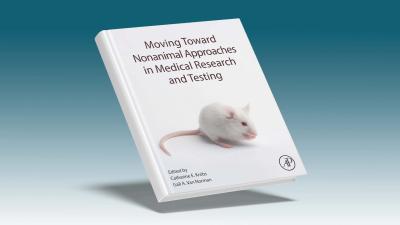
Each year on April 24, scientists, advocates, and policymakers around the world mark World Day for Laboratory Animals—a chance to reflect on the millions of animals used in research and testing and a call to accelerate the transition to better science. First established in 1979, the day was created to commemorate animals used in experimentation and to promote their replacement with advanced, nonanimal methods.
Today, that call is more relevant than ever.
Scientific and regulatory landscapes are shifting toward nonanimal approaches, methods that are often faster, more predictive of relevant outcomes, and better aligned with public needs. At the Physicians Committee for Responsible Medicine, we work at the center of that shift: advancing policies, supporting scientific innovation, and holding institutions accountable to replace animal experiments with more relevant approaches.
Driving Change Across Species and Systems
Animal use in research, testing, and education spans many species and scientific fields, underscoring the urgency to replace these animals with more ethical and effective methods. Here, we highlight a few ways the Physicians Committee is advancing nonanimal research.
Primates
Back in 2015, the National Institutes of Health (NIH) agreed to end all funding for chimpanzee research—a milestone the Physicians Committee worked for years to achieve. Yet, nonhuman primates remain among the most controversial animals used in experimentation, with federal funding continuing to sustain the use of more than 100,000 monkeys used or held in U.S. laboratories each year.
Over the past decade, the Physicians Committee has driven meaningful progress at both the federal and institutional levels. Following the NIH’s decision to no longer fund chimpanzee experiments, we advocated to move the chimpanzees being held at Alamogordo Primate Facility into a sanctuary, a transition the agency finally agreed to in 2024. More recently in February 2026, we helped secure a formal negotiation period between Oregon Health & Science University and the NIH to transition the Oregon National Primate Research Center away from primate experimentation and toward sanctuary. Sanctuary is rarely an option for animals used in experiments, and part of our work is focused on making this path more viable for the thousands of primates still in laboratories.
We also successfully intervened to stop the use of monkeys in medical training, halting an August 2025 course at Wake Forest University that would have subjected small vervet monkeys to invasive procedures. Additionally, we have engaged Congress and NIH advisory bodies to limit new investments in primate research infrastructure and instead direct newly appropriated facility funds toward responsible placement of primates into sanctuary, sanctuary capacity, and facility transitions that support human-based research.
One of the primary ways primates continue to be used is in drug safety testing, particularly for biologic drugs, where as many as 144 primates may be used for a single investigational product. A key driver is ICH S6(R1), the international guideline governing nonclinical safety testing for biologic drugs. Because these drugs often act differently across species, the guideline has historically led sponsors to rely on primates as the default species for safety testing. Established before many human-based approaches were developed, the guideline has not kept pace with advances in more predictive, nonanimal methods.
Over the past year, the Physicians Committee has raised these concerns internationally through our work with the International Council on Animal Protection in Pharmaceutical Programmes (ICAPP) and directly with U.S. Food and Drug Administration (FDA) leadership. We have emphasized that revising ICH S6(R1) is essential to achieving the FDA’s Roadmap to Reducing Animal Testing. As a result, FDA leaders have publicly signaled their intent to pursue revisions to ICH guidelines in alignment with the roadmap.
In the year ahead, we are focused on ensuring that federal funding and international testing standards align with this transition—redirecting resources away from primate experimentation and toward human-based methods—while advancing policies that support institutional transitions, including facility conversion and the placement of animals into sanctuary.
Dogs
Wayne State University has subjected dogs to painful, deadly cardiovascular experiments for 35 years without producing any results for patients.
Over the past year, the Physicians Committee has intensified our effort to end these experiments. In October 2025, Queenie’s Law, a bill that would prohibit painful dog experiments at public institutions, sailed through a Michigan House of Representatives committee with bipartisan support. Soon after, two National Football League players—Sam LaPorta and Brock Wright of the Detroit Lions—worked with us to call on the state legislature to pass the bill. In March, state Sen. Dayna Polehanki joined us at Wayne State to deliver petitions from more than 100,000 people to the university’s new president. Meanwhile, we continued to work with allies like the Wilberforce Institute to pressure the NIH to cancel funding for the dog experiments.
On April 22, a big development occurred. Michigan news outlet MLive reported that, for the first time in decades, Wayne State University was not conducting any dog experiments! But the university made clear it is trying to get more money from the NIH to restart the failed project. We are continuing to pressure the NIH to deny any new funding to Wayne State.
Dogs are also widely used in safety and efficacy testing for drug development due to outdated regulatory expectations, even when these experiments may not reliably predict human outcomes. We’ve worked with Congress, the FDA, and industry partners to advance policies that move away from routine dog tests and support the use of human-based methods for drug safety assessment.
At the same time, we are advancing science to replace these tests. Through an international effort with the Organisation for Economic Co-operation and Development (OECD), an international advisory committee that sets chemical testing guidelines, along with collaborations with the NIH, regulators, and academic partners, we are developing human-based approaches to assess cardiotoxicity—the harmful effects of drugs or chemicals on the heart—a critical safety concern traditionally studied in dogs and other animals. These approaches include lab-grown human muscle tissue models and AI-driven prediction tools that can evaluate cardiovascular risk without the use of dogs or other animals. We are also leading efforts to replace the use of dogs in systemic toxicity testing, where they are often used to satisfy the second “non-rodent” species requirement to assess the overall toxicity of chemicals on the body.
In the year ahead, we are focused on ending funding for dog experiments at Wayne State and shifting regulatory and funding priorities toward human-based approaches, while accelerating the adoption of these methods.
Cats
After significant advocacy efforts by the Physicians Committee, in 2016, Washington University in St. Louis replaced live cats in its pediatrics program, where rigid plastic tubes had been repeatedly forced down their windpipes. Although cats are less widely used than other species, they are still subject to harmful experiments, and we are actively working to end their use through our push for a transition to human-based methods across all federal agencies.
Mice and Rats
Mice and rats are the most widely used animals in research and testing. Yet despite their extensive use, the federal government does not collect accurate data on how many mice and rats are used in research and testing each year, making it difficult to measure progress toward reducing and replacing animal experiments.
Over the past year, the Physicians Committee has advanced efforts to address the scale of animal experimentation. We helped introduce and build support for the Federal Animal Research Accountability Act (H.R. 3295), which would require the NIH to collect and publicly report animal use data—bringing long-overdue transparency to federally funded research. We are also working with Congress and the NIH to end funding for widely criticized behavioral experiments like the forced swim test and tail suspension test, which have poor translation to human mental health.
At the regulatory level, we continued to urge the FDA to revise its guidance and regulations to clarify where animal testing is not required and to push for broader adoption of human-based methods. We are also working to modernize food labeling regulations that require protein digestibility testing in rats—advocating for validated in vitro methods that can replace animal use while better supporting plant-based nutrition. In 2016, our advocacy led to the inclusion of a historic mandate to replace and reduce vertebrate animals in chemical testing required by the Environmental Protection Agency (EPA), and we are currently working with Congress to strengthen this mandate.
We are also addressing long-term toxicity testing, where large numbers of rats and mice are force-fed high doses of chemicals in two-year long tests to assess whether a chemical can cause cancer. These tests are historically required by regulatory agencies to assess long-term chemical or drug exposures. Through our scientific publications, conference presentations, and trainings, we have demonstrated how these tests can be significantly reduced—and in many cases replaced, even within existing regulatory frameworks.
At the institutional level, our advocacy led to the shutdown of a federally funded nutrition study at Colorado State University that would have killed more than 17,000 animals, demonstrating how human-based research can replace animal use in practice. We have also continued to challenge archaic rodent use in education at Macalester College and promote nonanimal alternatives.
In the year ahead, we are focused on advancing federal legislation to improve transparency, ending funding for experiments on mice and rats, and accelerating the shift toward clinical, computational, and human-derived approaches that better reflect human biology.
Pigs
Pigs are commonly used in medical training and experimental procedures, despite clear evidence that methods based on human anatomy provide equal or better outcomes.
Over the past year, the Physicians Committee has helped drive the replacement of pigs in medical training programs across the country. Following sustained advocacy—including physician letters, public campaigns, and legislative engagement—institutions such as Brown University, St. Elizabeth Youngstown Hospital, and the University of Arizona replaced pigs in training exercises, joining hundreds of programs that now rely on human-relevant methods like simulators and cadavers. These changes reflect a growing recognition that training on human anatomy better prepares physicians and improves patient outcomes.
At the same time, we are working to address emerging areas where pigs are being used in high-risk and resource-intensive research. Xenotransplantation—the transplantation of organs from genetically engineered pigs into humans—has gained attention in recent years, but significant scientific and safety concerns remain. The Physicians Committee is working to ensure that policymakers and the scientific community prioritize more effective and ethical approaches, including improving human organ transplantation, such as increasing organ donation and recovery, improving organ preservation and transport methods, expanding donor criteria, and improving the diagnosis and management of organ rejection.
In the year ahead, we are focused on expanding the replacement of animals in medical training and ensuring that funding and research priorities shift toward human-based approaches that are more relevant, reliable, and aligned with patient care.
Cephalopods
Cephalopods, including octopuses, squid, and cuttlefish, are increasingly used in research but remain excluded from federal protections simply because they are invertebrates.
Over the past several years, the Physicians Committee has led efforts to close this gap—starting with a petition to the NIH to include cephalopods in the definition of “animal” under the Public Health Service Policy, followed by Congressional engagement to apply pressure on the agency. After years of escalation, the NIH issued a request for information—an early step toward developing federal policy—about proposed guidance on cephalopod care and use. Our team of experts provided input, highlighting that ultimately, the NIH should end its support for cephalopod projects. Final guidance has yet to be issued.
We are continuing to push for stronger, enforceable protections by urging the NIH to fully update its policies, so cephalopods are no longer excluded from basic federal oversight. And we won’t stop until these amazing creatures are left in their homes in the ocean.
Horseshoe Crabs
Horseshoe crab blood has long been used to test vaccines and injectable drugs for bacterial contamination, requiring the capture and bleeding of these animals despite the availability of reliable, synthetic alternatives.
We have led efforts to replace this practice, working with regulators, industry, and Congress to advance acceptance of synthetic endotoxin testing methods. This work helped drive a major shift in 2024, when the U.S. Pharmacopeia approved the use of synthetic methods, and most recently secured Fiscal Year 2026 congressional report language directing the FDA to update its guidance and support broader adoption of these approaches.
In the year ahead, we are focused on ensuring that the FDA fully implements this directive as intended—updating its guidance to support the use of synthetic methods for both new and existing products—while continuing to advance international harmonization so that these animal-free approaches become the global standard.
Fish
Fish are commonly used in ecotoxicity, endocrine disruption, and developmental and reproductive testing to assess the environmental impacts of chemicals such as pesticides. The Physicians Committee is helping replace these tests by advancing nonanimal methods at both the national and international levels.
Through our leadership at the OECD, which sets global chemical testing guidelines, we have helped integrate nonanimal approaches into international safety standards—including a fish cell line method derived from rainbow trout that can predict ecological hazards without the use of live fish. We have also worked with the U.S. Environmental Protection Agency and California EPA to train scientists on nonanimal approaches, including the EPA’s suite of alternative tools. Through our NURA training program, we provided continuing education on how to use this fish cell line method to replace traditional live fish tests.
In the year ahead, we will continue working with regulators to expand the use of these methods and accelerate the shift toward more efficient, animal-free environmental testing.
Birds
Along with fish, birds are used for ecotoxicity testing of industrial and agricultural chemicals. In 2024, the Physicians Committee joined a case challenging an EPA test order for avian reproduction testing that resulted in the order being vacated by the court. The decision and set a precedent requiring the EPA to explain the basis for ordering tests on birds and other animals in the future.
In the year ahead, we will continue working with regulators to expand the use of nonanimal methods and accelerate the shift toward more efficient, animal-free testing.
Rabbits
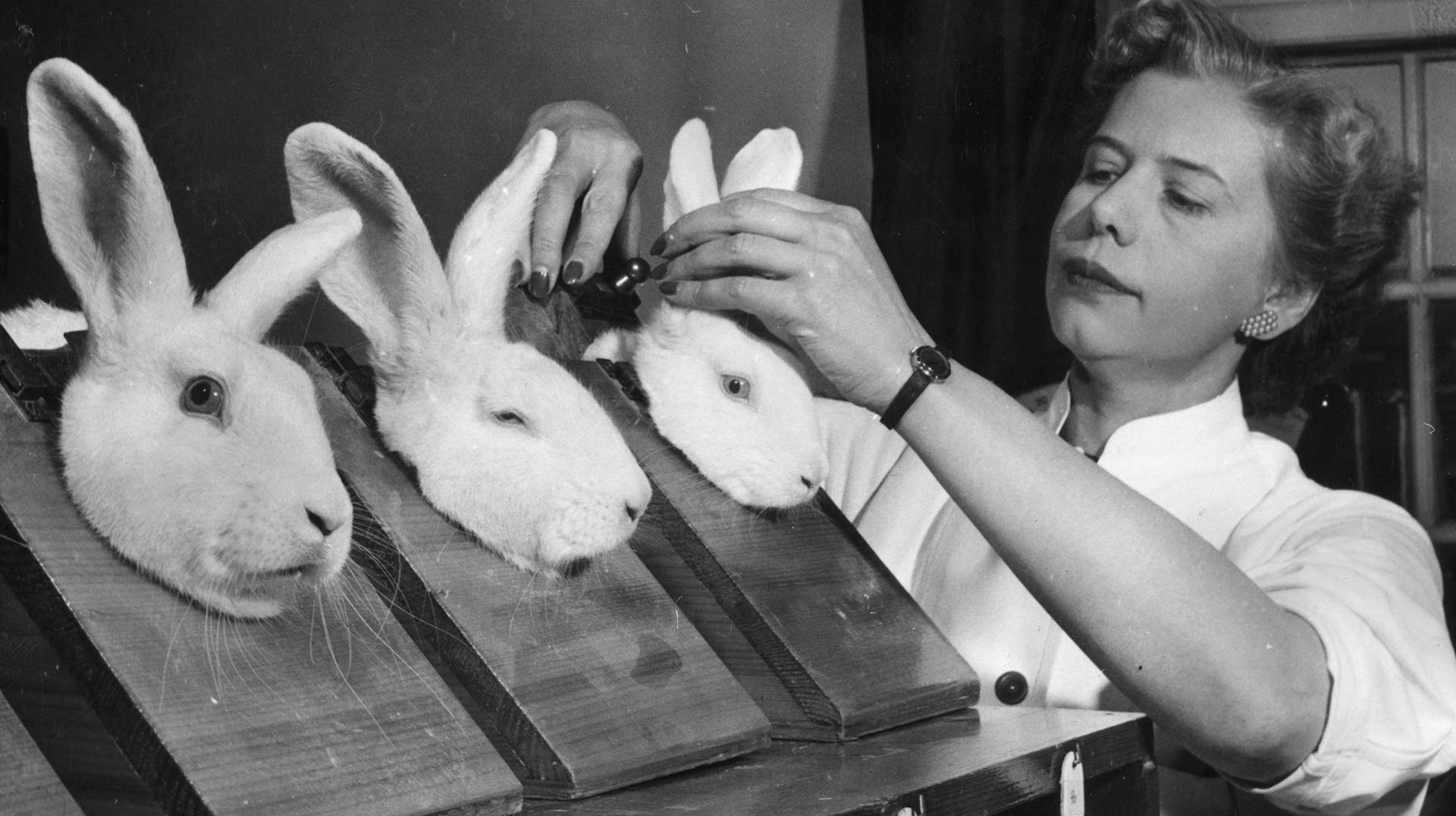
Rabbits have been used to test skin and eye irritation since the development of the Draize method in 1944. Despite serving as the benchmark against which new methods were measured for decades, the test has been recognized as having poor reproducibility and limited relevance to human biology. The Physicians Committee has continuously supported the development of nonanimal methods to replace these cruel tests on a global scale with more reliable, human-based approaches, including a nonanimal method for assessing eye hazard potential and the Reconstructed Human Cornea-like Epithelium (RHCE) test method, which was adopted in 2022. In 2024, the Physicians Committee sponsored an update to an international guidance document that prioritizes nonanimal methods for eye irritation testing, making clear that rabbits should no longer be used for these experiments.
Guinea Pigs
Guinea pigs have historically been used to assess skin sensitization—the potential for a substance to trigger an allergic reaction after contact with the skin—by applying or injecting chemicals and observing reactions over time.
Over the past several years, we have played a leading role in replacing these tests with nonanimal methods. Our work contributed to the first globally recognized nonanimal test guideline for skin sensitization in 2021, with continued advances since then through international efforts at the OECD. We have also worked closely with industry partners and provided training to scientists and regulators to support adoption of these methods, including most recently on the SARA-ICE approach, a computer-based model for skin sensitization.
In the year ahead, we are focused on completing the transition away from animal tests by working with the EPA and industry partners to demonstrate that nonanimal defined approaches can fully replace remaining uses, including complex mixtures. Through a collaborative white paper effort, we aim to accelerate regulatory acceptance and make full replacement of guinea pig tests for skin sensitization a near-term reality.
Animal-Free Science Is Already Here
Across all these areas, one theme is clear: The transition away from animal use is already underway. Federal agencies, including the FDA, NIH, and EPA, are increasingly integrating nonanimal approaches, supported by congressional directives and rapid advances in technologies like organ-on-chip systems and computational models.
We are working to accelerate this shift by advancing policies that support the use of nonanimal approaches, removing outdated requirements, supporting the development and adoption of nonanimal methods, and equipping scientists and regulators to use them.
A Day of Reflection and Progress
World Day for Laboratory Animals is both a time to reflect and a reminder that animal-free science is not the future—it is the present. The focus now is on ensuring this transition continues, so that research fully reflects methods that are more ethical, efficient, and relevant to human health.