Skip to main content
FDA Updates Outdated Animal Testing Regulations Following Nearly a Decade of Physicians Committee Advocacy
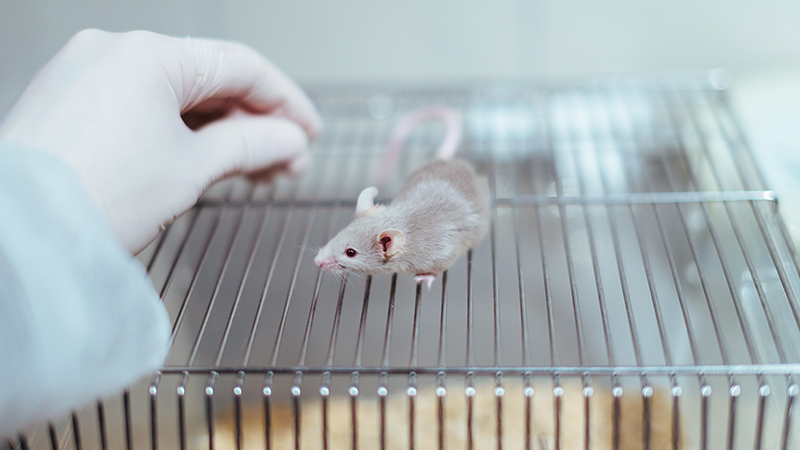
Today, the U.S. Food and Drug Administration (FDA) announced that it is updating numerous drug and biological product regulations by replacing references to “animal testing” and “animal studies” with the broader “nonclinical” terminology. This long-awaited change removes outdated language and creates a clearer pathway for the use of nonanimal methods in drug development.
The Physician's Committee has advocated for this reform for nearly a decade. In 2017, Physicians Committee experts identified 235 FDA regulations that should be updated to remove barriers to nonanimal methods and submitted the findings to the agency. Since then, the organization has worked with Congress, FDA officials, scientists, and drug developers to advance these changes.
“Changing a few words in federal regulations can have a significant impact,” said Janine McCarthy, MPH, director of research policy for the Physicians Committee. “For decades, the FDA’s regulations have directed drug developers toward animal tests, even as more predictive human-based methods have become available. Today’s action sends a clear message that nonanimal methods should play a central role in evaluating the safety of new medicines.”
The changes outlined by the FDA cover key stages of drug development that occur before a drug can move into human clinical trials and marketing. Traditionally, the testing required to demonstrate safety and efficacy in these stages has involved extensive animal testing. Advances in human-based technologies now make it possible to avoid animal testing while better predicting drug effects in humans.
Today’s regulatory changes are necessary to reduce reliance on animal experiments and enable modern nonanimal methods that may better predict how drugs will affect people. Replacing regulatory “animal testing” references with “nonclinical,” defined to include in vitro and computational methods, clarifies that drug developers can submit evidence from these nonanimal methods for endpoints where animal tests have traditional been used.
The update builds on the FDA Modernization Act 2.0, which removed a longstanding statutory preference for animal testing, and advances the goals of the FDA Modernization Act 3.0, separate versions of which have passed both chambers of Congress, that mandates the FDA to update its regulations accordingly. Although today’s announcement represents significant progress, additional reforms are still needed. The update covers only a subset of the regulations needed to comprehensively modernize the drug testing framework. Notably, it leaves out the Animal Rule, which provides a pathway for approving certain medical countermeasure based solely on animal testing, as well as provisions affecting product classification requests and orphan drug designation, which are needed to replace animal testing earlier in a product’s regulatory pathway.
Today’s announcement is a meaningful step towards human-based science and signals FDA’s commitment to removing long-standing barriers to nonanimal method implementation. The agency should build on this progress by comprehensively updating the remaining regulations and guidance that favor animal testing and encouraging companies to use modern nonanimal methods in place of animal tests. The Physicians Committee will continue working with the FDA to remove regulatory barriers and accelerate the adoption of nonanimal methods that better protect patients and animals.
Written comments on the regulatory change can be submitted by December 7, 2026, and the final rule is effective February 4, 2027.
Physicians Committee Media Contact
Reina Pohl, MPH
202-527-7326
rpohl[at]pcrm.org
Founded in 1985, the Physicians Committee for Responsible Medicine is a nonprofit organization that promotes preventive medicine, conducts clinical research, and encourages higher standards for ethics and effectiveness in education and research.