Skip to main content
When "Forever Chemicals" Team Up: Testing PFAS Mixtures in Human Cells Reveals Hidden Risks
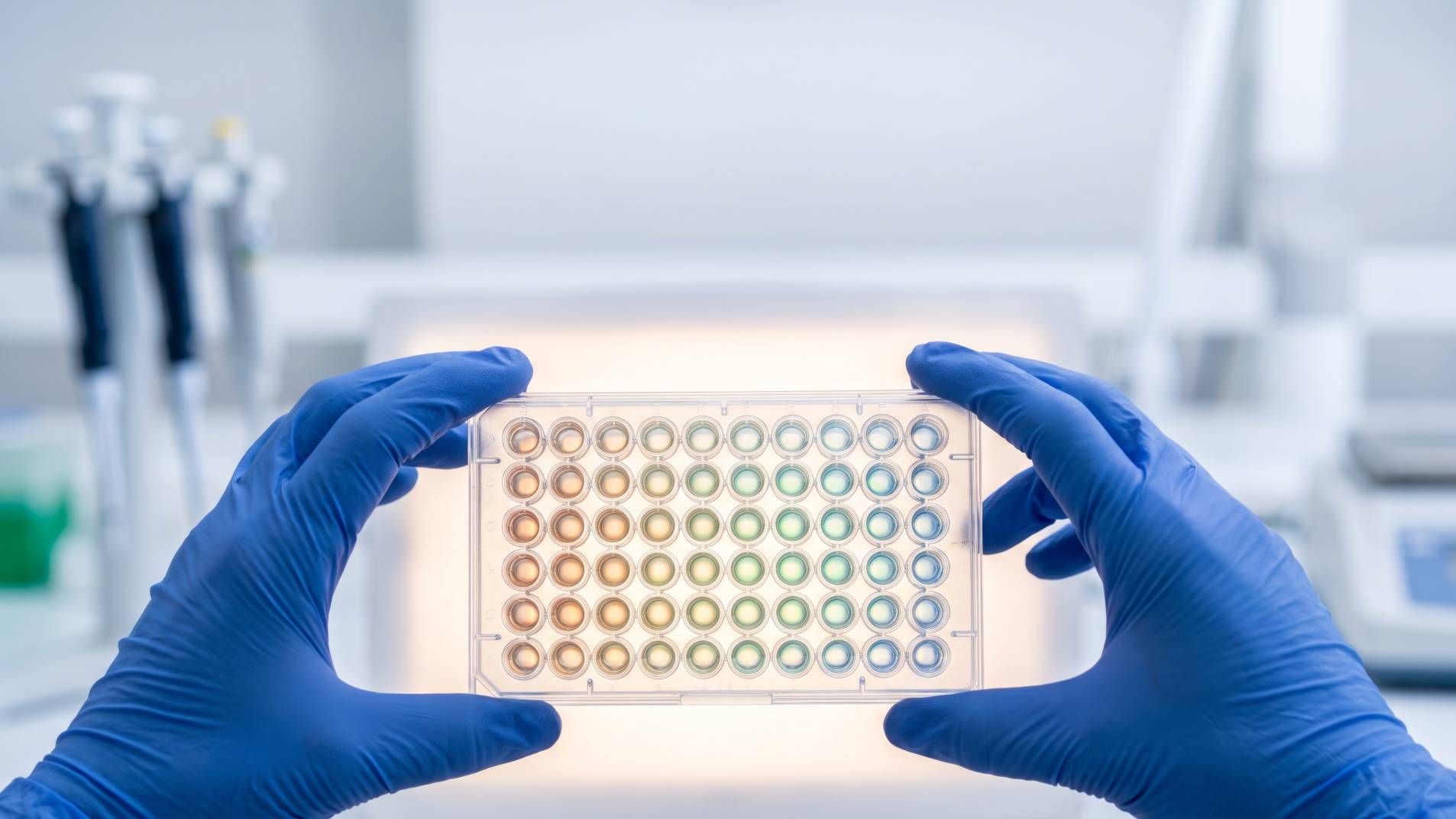
Perfluoroalkyl and polyfluoroalkyl substances (PFAS) are "forever chemicals," found in drinking water, food packaging, firefighting foam, and countless consumer products, almost always occurring as complex mixtures. People are rarely exposed to just one PFAS at a time, but most safety testing looks at them one chemical at a time. That leaves a big question: When these chemicals combine, do their effects add up in the way we would expect, or do they interact in ways that make them more dangerous?
To answer this question, researchers at Texas A&M University used 20 realistic PFAS mixtures, each containing anywhere from 4 to 56 different PFAS. The compositions for these mixtures were drawn from real-world data, including contaminated drinking water at sites across the United States, PFAS levels in people's blood measured during national health surveys, and water sampled after a major industrial fire near the Houston Ship Channel. The team then exposed eight different types of human cells to each mixture, covering the liver, brain, heart, kidney, and blood vessels, and watched how the cells reacted across a wide range of doses.
Some cells were far more sensitive than others. Liver cells and brain cells consistently showed the strongest responses, reacting to nearly all of the mixtures, while kidney and blood vessel cells were much less affected. Mixtures that matched heavily contaminated water sources were among the most biologically active.
The most important finding came when the team used this cell-based method to test a common shortcut that risk assessors use to estimate the effects of chemical mixtures, based on concentration addition. Because most safety data come from testing one chemical at a time, this approach predicts a mixture's toxicity by adding up the test results for each chemical in it, weighted by how much of each is present. Using their earlier results for each single PFAS in the same human cells, the team predicted the lowest concentration at which each mixture would start to affect the cells and compared this to the actual mixture results. The shortcut did not hold up. It correctly predicted whether a mixture would affect the cells only about 60% of the time, and when a mixture did cause effects, it typically underestimated the mixture's potency by about 300 times, meaning the real mixtures affected cells at much lower concentrations than the math predicted.
Instead of running animal experiments, the team used human cells to quickly and directly evaluate dozens of realistic PFAS mixtures. PFAS "forever chemicals" can be far more harmful as real-world mixtures than testing individual chemicals would suggest, showing that testing mixtures directly in human cells offers a more accurate, animal-free way to estimate their health risks.
This study is a compelling example of how human cell-based new approach methodologies (NAMs) can replace animal testing while better reflecting the complex, real-world chemical exposures people actually face. To learn more about cell-based NAMs, please visit our NAM Use for Regulatory Application page.