Skip to main content
In Response to New Guidelines, Physicians Call for Diet Changes, Not Hormones, as First Step in Menopause Treatment
Dietary intervention, which is just as effective as hormone therapy for hot flashes but has no negative side effects, should be first line treatment, doctors group says

Washington—The public health nonprofit Physicians Committee for Responsible Medicine is asking the American College of Physicians (ACP) to prioritize diet changes in its new guidelines for menopause treatment. Despite years of research showing that a dietary intervention is as effective as hormones for vasomotor symptoms (hot flashes), this treatment is absent from the new ACP guidance for women with menopausal symptoms.
The new ACP guidance recommends hormone therapy as first-line treatment followed by certain serotonin–norepinephrine reuptake inhibitors (SNRIs), certain selective serotonin reuptake inhibitors (SSRIs), and NK receptor antagonists, as well as gabapentin. All of these have important side effects and limited efficacy.
A 2022 study, published by the North American Menopause Society in the journal Menopause, found that a diet intervention is as effective (88%) as hormone replacement therapy (70-90%) for reducing menopausal hot flashes, without the associated health risks.
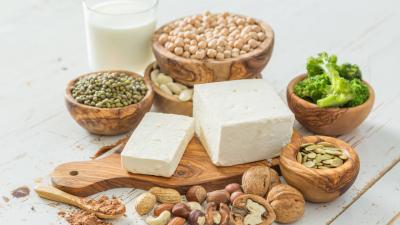
The WAVS trial, the Women’s Study for the Alleviation of Vasomotor Symptoms, found that a plant-based diet rich in soy reduced moderate to severe hot flashes by 88% and helped women lose, on average, 8 pounds in 12 weeks.
“A diet change should be first-line treatment for hot flashes,” explained lead researcher Neal Barnard, MD, president of the Physicians Committee and adjunct professor at the George Washington University School of Medicine. “We do not fully understand yet why this combination works but it seems that these three elements are key: avoiding animal products, reducing fat, and adding a serving of soybeans.”
The 2022 study was the second phase of a two-part trial, the first of which was published in Menopause in 2021.
Included in the study were 84 postmenopausal women reporting two or more hot flashes per day. They were randomly assigned either to an intervention group consisting of a low-fat vegan diet, including half a cup of cooked soybeans daily or to a control group that made no diet changes for 12 weeks.
Intervention study participant Margo LaMarsh says of the changes she experienced during the trial, "The hot flashes were less frequent, and they were also less intense. I no longer had to change pajamas in the middle of the night due to sweating. The diet made me feel so much better. I have so much more energy, my skin is clearer, and I lost 20 pounds in 12 weeks."
“Our studies demonstrate the effectiveness of a dietary intervention for menopausal symptoms, and we are hopeful that the American College of Physicians will acknowledge this by amending their recent treatment recommendations,” Dr. Barnard said.
Physicians Committee Media Contact
Leslie Raabe
202-527-7319
lraabe[at]pcrm.org
Founded in 1985, the Physicians Committee for Responsible Medicine is a nonprofit organization that promotes preventive medicine, conducts clinical research, and encourages higher standards for ethics and effectiveness in education and research.