Skip to main content
International Journal of Disease Reversal and Prevention Publishes Proceedings of the 2025 International Conference on Nutrition in Medicine
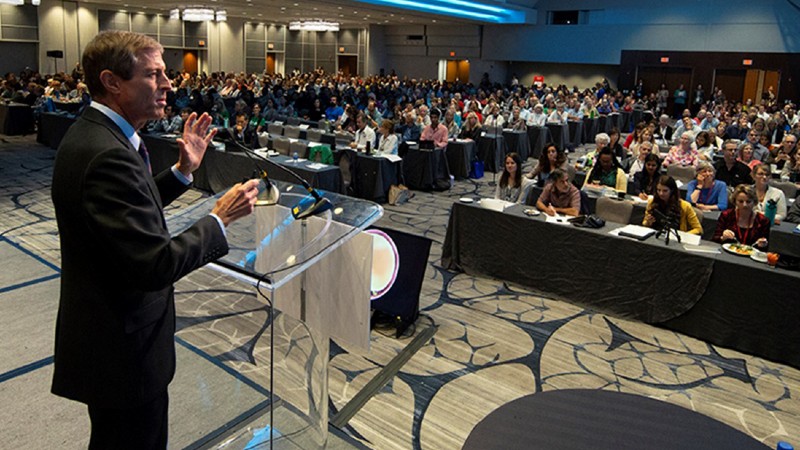
WASHINGTON, D.C.—A summary of the presentations and findings of the International Conference on Nutrition in Medicine (ICNM), the annual meeting conducted by the Physicians Committee for Responsible Medicine, was published today in the International Journal of Disease Reversal and Prevention. Clinicians now have ready access to the latest information regarding the role of dietary interventions in breast and prostate cancers, menopause, and Alzheimer’s disease, among others.
Twenty-five of the world’s leading nutrition experts, including Christopher P. Gardner, PhD, Rehnborg Farquhar Professor of Medicine at Stanford University; Kristi Funk, MD, FACS, DipABLM, medical director of the Pink Lotus Breast Center; and Edward Giovannucci, MD, ScD, of the Harvard T.H. Chan School of Public Health, presented at the 13th annual International Conference on Nutrition in Medicine from Aug. 14 to 16, 2025, in Washington, D.C. Mitchell Katz, MD, deputy editor of JAMA Internal Medicine and CEO of NYC Health + Hospitals, opened the meeting.
During the three-day meeting, hundreds of physicians, advanced practice clinicians, dietitians, nutrition educators, and others learned about the latest research on nutrition and how to use it in their everyday practice.
“What’s on your plate matters,” said Dr. Giovannucci, who presented “What Role Does Nutrition Play in Prostate Cancer?” at ICNM. “Plant-based foods, especially whole grains, leafy greens, fruits, tomatoes, and coffee, are linked to a lower risk of fatal prostate cancer.” At the conference, Dr. Giovannucci shared evidence from large prospective studies that suggest that diets high in lycopene (tomato products) and whole-grain fiber are associated with a lower risk of fatal prostate cancer, while a higher intake of dairy products (especially low-fat dairy) is linked to increased risk.
Dr. Gemma Newman of the National Health Service in the UK said, “With the rapidly expanding market of dietary supplements, it’s crucial to separate fact from fiction and provide clinicians with a framework for a targeted, safe, and effective plan within a food-first, lifestyle-medicine model.”
Her presentation at ICNM concluded that dietary supplements should play a limited, supportive role in patient care; most people do not benefit from routine supplementation unless correcting a deficiency or addressing specific life stages. Clinicians should prioritize high-quality whole foods, especially plant-predominant diets, and healthy lifestyle habits as the foundation of disease prevention and treatment.
Additional presentations summarized in the IJDRP paper cover lowering cholesterol, omega-6 and omega-3 fatty acids, nutrition and skin health, and more.
The annual conference is jointly provided by the Physicians Committee for Responsible Medicine, a nonprofit health advocacy organization of more than 17,000 physician members, and the George Washington University School of Medicine and Health Sciences. Physicians, nurses, dietitians, health coaches, and pharmacists can earn up to 20.75 continuing education credits for attending.
Learn more about the 2026 International Conference on Nutrition in Medicine and register at PCRM.org/ICNM.
Physicians Committee Media Contact
Leslie Raabe
202-527-7319
lraabe[at]pcrm.org
Founded in 1985, the Physicians Committee for Responsible Medicine is a nonprofit organization that promotes preventive medicine, conducts clinical research, and encourages higher standards for ethics and effectiveness in education and research.