Skip to main content
Human-Based Research Has Arrived at the NIH
WASHINGTON, D.C.—Over a year after it was first proposed by the National Institutes of Health (NIH), the Office of Research Innovation, Validation, and Application (ORIVA) has arrived.
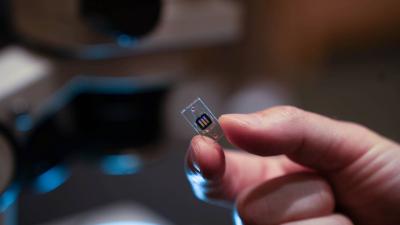
Housed within the Office of the Director, ORIVA will coordinate agency-wide efforts to advance the use of nonanimal, human-based research approaches—like 3D cell-based tissue chips and organoids—ensuring consistent, streamlined adoption across NIH’s diverse research portfolio. It will also serve as an interagency hub to support parallel efforts at the Food and Drug Administration and the Environmental Protection Agency, facilitating cross-agency validation efforts and ensuring efficient resource allocation to relevant test guidance updates.
The Physicians Committee for Responsible Medicine has worked for decades to promote human-based research through advocacy, scientific training, and working with federal agencies. ORIVA’s launch reflects the growing recognition that human-based approaches are more effective and more clinically relevant than animal experiments.
“We are at an inflection point,” said Catharine E. Krebs, PhD, medical research program manager at the Physicians Committee for Responsible Medicine. “Not just at the NIH, but also at the FDA, EPA, and CDC, and not just in the US, but globally: We are seeing major shifts to reduce reliance on animals and more accurately model human biology.”
Since April 2025, the NIH has taken promising steps to strengthen support for human-based research and to reduce animal use. The agency no longer releases funding opportunities exclusively focused on animal-based projects. It entered into negotiations to potentially phase out primate use at the largest of the seven National Primate Research Centers. And it recently awarded over $150 million for human-based research technology development, validation, and standardization.
But momentum has been building for much longer. The Tissue Chip for Drug Screening program was launched in 2012. It has since grown into multiple successful Tissue Chip projects and initiatives at the National Center for Advancing Translational Sciences, catapulting nonanimal research technologies into the revolutionary tools we have today.
“ORIVA has been a long time coming,” said Dr. Krebs. “It’s no longer a question of whether these technologies will improve the way we conduct research. They already are. Now the question is how best to implement them so they reach their full potential. ORIVA will help us do that, and patients and animals alike will benefit.”
Physicians Committee Media Contact
Reina Pohl, MPH
202-527-7326
rpohl[at]pcrm.org
Founded in 1985, the Physicians Committee for Responsible Medicine is a nonprofit organization that promotes preventive medicine, conducts clinical research, and encourages higher standards for ethics and effectiveness in education and research.