Skip to main content
Human-on-a-Chip Models of Female and Male Reproductive Systems for Research and Testing
By SciComm Catalyst program participant and PhD candidate Kristin Schüler
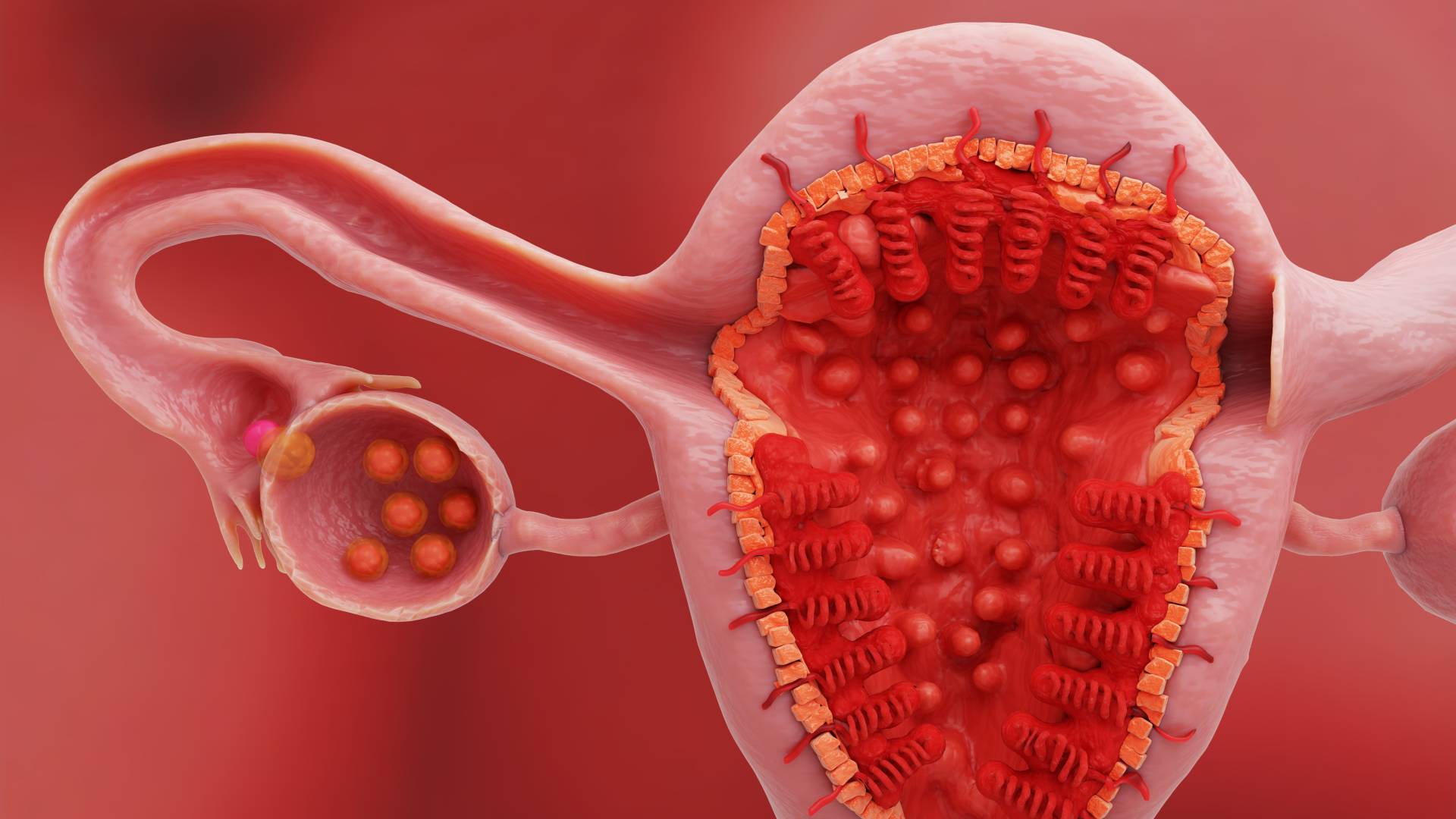
Studying human reproduction is crucial for a better understanding of and treating reproductive health conditions like infertility, which affects millions of people worldwide, and for protecting people from medicines and environmental chemicals that interfere with reproductive function. However, reproduction is challenging to study because it depends on complex interactions between hormones, genes, and specialized tissues. Conventional research methods, including animal experiments, cannot fully capture the complexity of human reproductive biology. Human organ-on-a-chip technologies are bridging this gap by recreating key features of reproductive organs and their physiological interactions in the laboratory.
For instance, female reproduction relies on tightly regulated communication between reproductive tissues, which conventional models fail to fully reproduce. Studying sperm production is equally challenging because the highly organized structure of the human testis rapidly deteriorates in the laboratory.
Two recent studies demonstrate how organ-on-a-chip technology is addressing these challenges in female and male reproductive health research. By combining human tissues with devices that mimic the body's natural environment, researchers have developed more realistic models of the female and male reproductive systems, providing new opportunities to study infertility, reproductive diseases, and the effects of drugs and environmental chemicals without using animals.
The first study, led by researchers from Gachon University (Incheon, South Korea) and Hallym University College of Medicine (Chuncheon, South Korea), described an ovary-endometrium-on-a-chip that recreates communication between the ovary and uterus. Using several types of human reproductive cells, the researchers engineered a three-dimensional organ-on-a-chip that reproduced hormone fluctuations and tissue remodelling that occurs during the menstrual cycle. The model also detected reproductive toxicity following exposure to test compounds, highlighting its potential as a nonanimal platform for evaluating the safety of new medicines and environmental chemicals.
The second study tackled another long-standing challenge in reproductive medicine: maintaining healthy human testicular tissue outside the body to investigate male reproductive biology. Researchers from Naval Medical University (Shanghai, China) and Nanjing University (Nanjing, China) addressed this problem by developing a human testis-on-a-chip that continuously supplies nutrients and oxygen to human testicular tissue while removing waste products, closely mimicking blood flow in the body. The chip preserved the tissue's structure and function for two weeks, allowing researchers to study male infertility, reproductive toxicology, and the effects of new medicines on reproductive health.
Together, the two studies illustrate how human organ-on-a-chip technology is closing important gaps in reproductive research by providing sophisticated models that better reflect female and male reproductive biology. These human-based platforms are improving fertility research, strengthening reproductive safety testing, accelerating the development of safer medicines, and helping researchers move away from animal use.
Kristin Schüler is a PhD candidate in Bioengineering at the Institute for Bioengineering and Biosciences, University of Lisbon, Portugal. Her research focuses on tissue engineering, biomaterials, and advanced human-relevant in vitro models for musculoskeletal diseases. Passionate about replacing animal experimentation with innovative human-based technologies, she serves as a Student Ambassador for the European Union Reference Laboratory for Alternatives to Animal Testing (EURL ECVAM), where she helps educate and inspire undergraduate students about the potential of animal-free science.
References
- Kim SR, Min EK, Lee CM, et al. A biomarker-driven ovary-endometrium organ-on-a-chip mimicking 3D multicellular complexity and menstrual cyclicity for predicting reproductive toxicity. Adv Sci (Weinh). 2026;13(30):e2511098. doi: https://doi.org/10.1002/advs.202511098
- Shen J, Wang X, Yang C, et al. Development and evaluation of a microfluidic human testicular tissue chip: a novel in vitro platform for reproductive biology and pharmacology studies. Lab Chip. 2025;25(4):577-589. doi: https://doi.org/10.1039/D4LC00780H