Skip to main content
Honoring Black History Month: Celebrating Impactful Stories From Our Food for Life Instructors
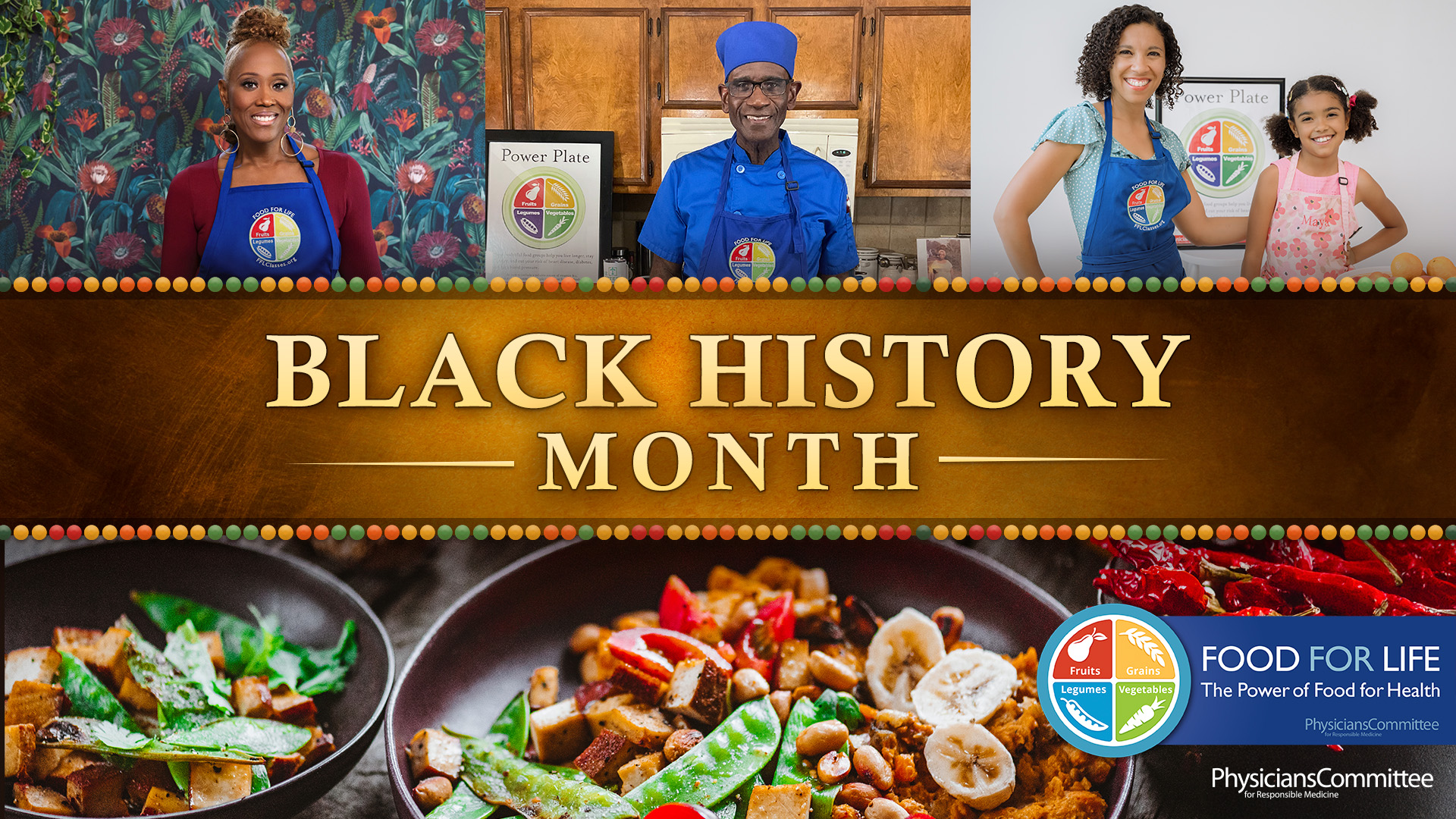
Black History Month is a time to honor leadership, resilience, and the lasting contributions of Black communities—past, present, and future. At Food for Life, we’re proud to celebrate Black instructors who are carrying that legacy forward by helping people reclaim their health through food.
Across the country and around the world, these Food for Life instructors are making a meaningful impact in their communities through evidence-based nutrition education, culturally grounded teaching, and a deep commitment to access and empowerment. Their work reflects the belief that food is more than nourishment—it is connection, tradition, healing, and possibility.
In this special Black History Month spotlight, we’re sharing the stories of six incredible Black Food for Life instructors. Through their lived experiences, community outreach, and plant-based education, they are creating spaces where people feel supported, informed, and inspired to take charge of their health. Several of these instructors also share favorite recipes rooted in culture and tradition—reminding us that honoring heritage and prioritizing health can go hand in hand.
Together, their stories reflect the heart of Food for Life: helping people regain their health through food, while honoring culture, community, and lived experience.
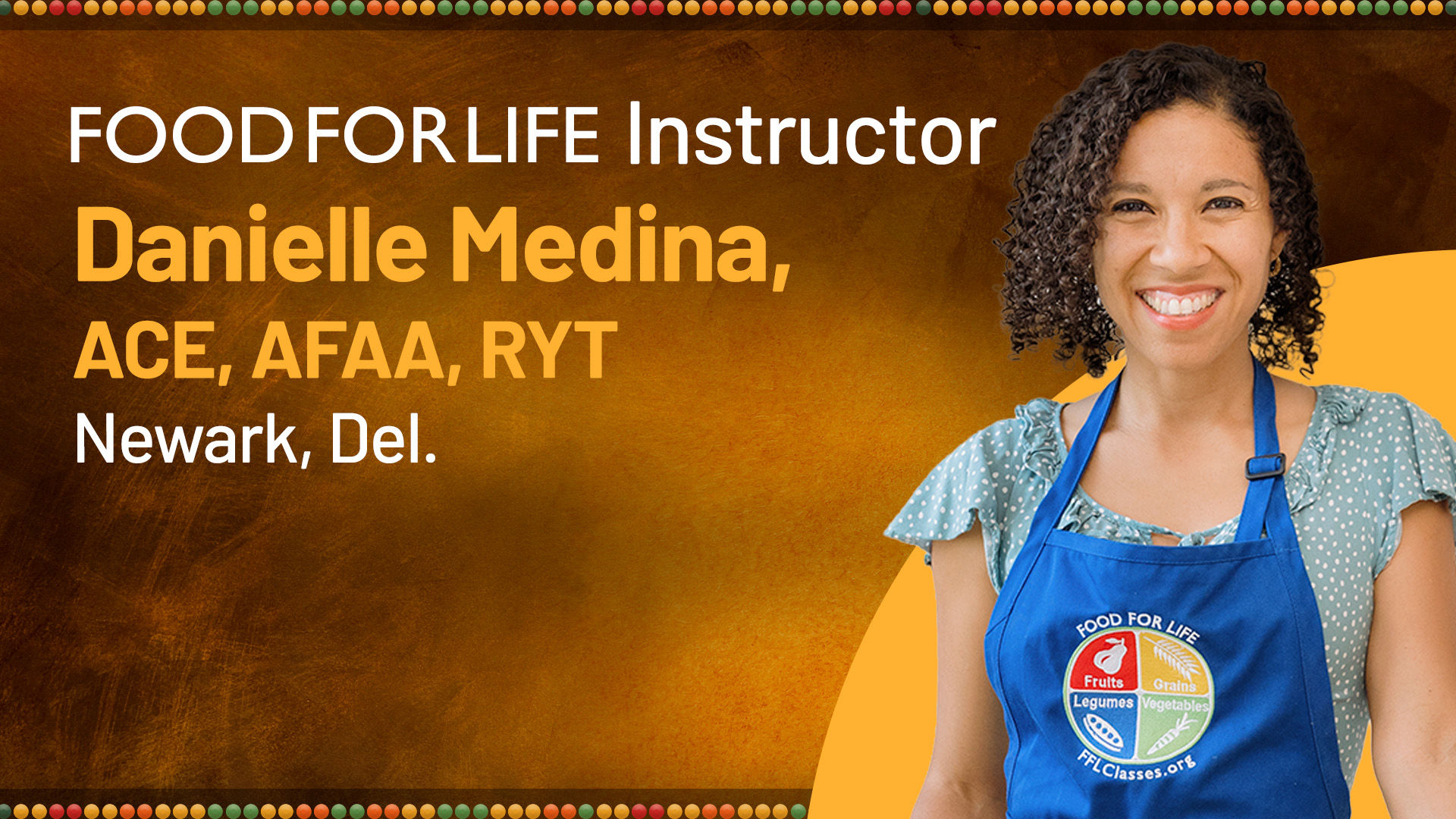
As a Food for Life instructor, Danielle Medina has seen how powerful it can be when nutrition education is delivered with empathy, accessibility, and respect. One of the most meaningful experiences in her work took place at Covenant House in Newark, N.J., an organization that supports youth and young adults facing housing instability and a lack of family support.
While co-hosting Covenant House's Chat & Chew workshops, Danielle watched participants engage deeply with conversations about their health—especially how to eat well on a limited budget. For many, it was the first time they felt truly heard and valued in a space centered on their well-being. That sense of connection and affirmation made the experience especially impactful for Danielle, reinforcing why this work matters.
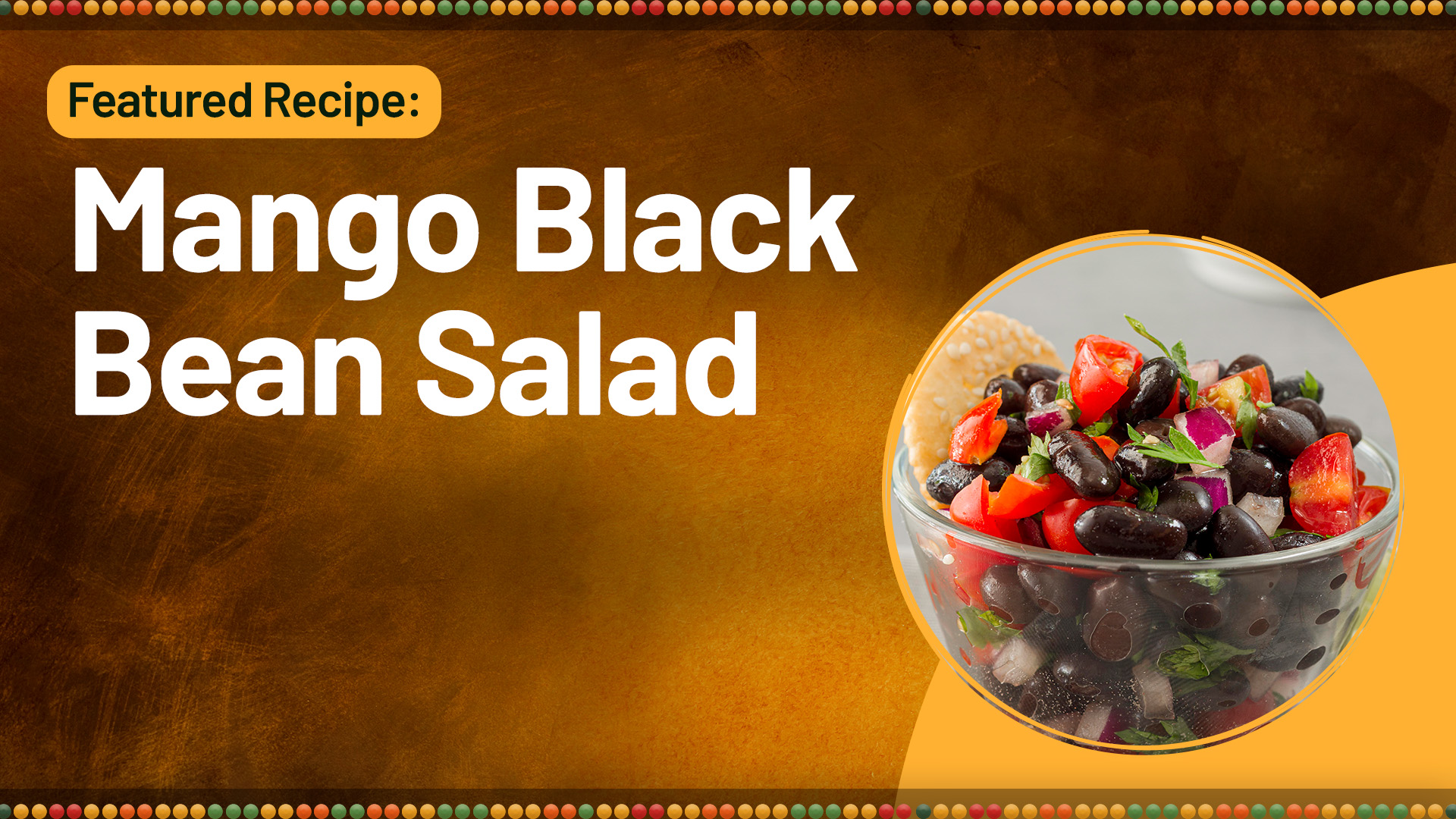
Danielle’s approach to plant-based cooking is welcoming and joyful, and she loves sharing recipes that bring people together. One of her favorites is a Mango Black Bean Salad—a colorful, sweet-and-savory dish that’s easy to prepare and fun to make with children. Through Food for Life, Danielle continues to create spaces where learning about health feels empowering, inclusive, and rooted in care.
Ingredients
2 cans black beans, drained and rinsed
1 large ripe mango, peeled and diced
1 red bell pepper, diced
2 garlic cloves, minced
1/2 red onion, finely chopped
Juice of 2 limes (about 1/4 cup)
1/4 cup fresh cilantro, chopped
Salt and pepper, to taste
Instructions
In a large bowl, combine black beans, mango, red bell pepper, red onion, and garlic.
Add lime juice and toss well.
Stir in fresh cilantro, salt, and pepper.
Let sit for at least 10 minutes to allow flavors to meld (or refrigerate for 30 minutes).
Serve chilled or at room temperature with tortilla chips, rice, or quinoa.
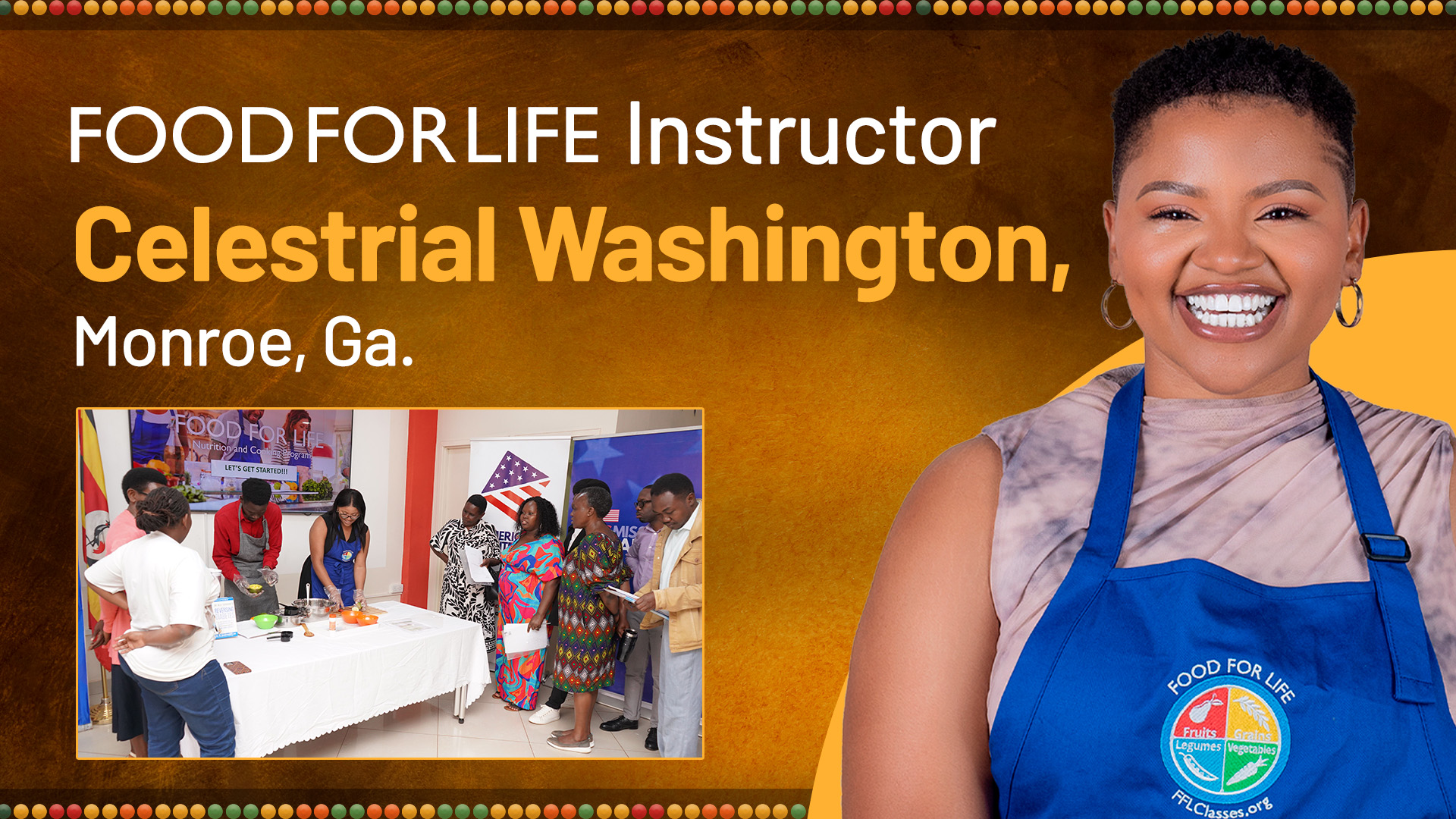
Celestrial Washington’s work as a Food for Life instructor is deeply rooted in her own journey toward healing. Growing up, chronic disease was normalized in her family, and by the age of 12, she was already experiencing high blood pressure that prevented her from participating in school sports. Like many people in her community, the guidance she received around health often felt inaccessible and limited—centered on medication rather than long-term, holistic solutions.
Years later, after a serious health scare that led her to step away from her job, Celestrial was introduced to a whole food, plant-based lifestyle by her eldest sister. She was stunned to learn that many of the health issues she had lived with for years could be improved—and even reversed—through food. This realization reshaped her understanding of what was possible and revealed how often communities like hers are not presented with a full range of options when it comes to health care.
As a Food for Life instructor, Celestrial is passionate about sharing an alternative narrative—one that encourages people, particularly African American and Indigenous communities, to ask questions, advocate for comprehensive care, and explore nutrition as a powerful tool for health. For her, this work is about restoring agency, dignity, and hope through education that is culturally grounded and realistic.
She has seen the impact of Food for Life extend far beyond her local community. One of her most meaningful experiences was teaching a class in Kampala, Uganda, where fear and stigma around type 2 diabetes initially kept some people away. Those who attended left empowered, equipped with practical knowledge to support themselves and their families. For Celestrial, this experience reinforced a core truth: Access to nutrition education is a form of resilience—and when shared within community, it has the power to create lasting change.
Class in Uganda that Celestrial taught (August 2025)
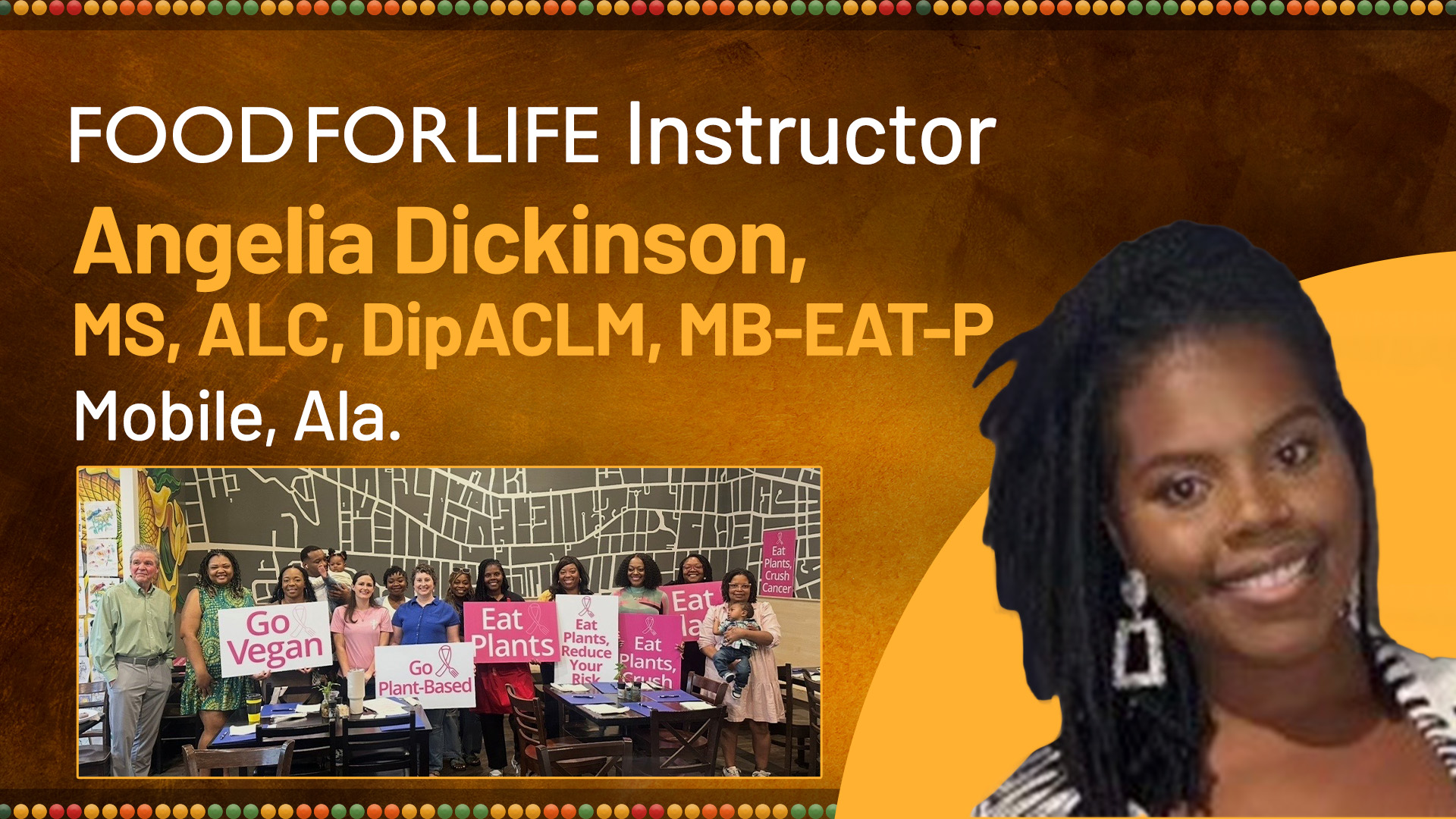
Raised in south Alabama, Angelia Dickinson brings Food for Life education to the very communities that shaped her. A Food for Life instructor, counselor, lifestyle medicine professional, and dietetic student, Angelia works primarily with families and children—leading Healthy Snack Programs and plant-based nutrition education in schools and community spaces.
Her approach is grounded in accessibility and cultural relevance. Recognizing that many families rely on stores like Dollar General or Dollar Tree, Angelia teaches in ways that meet people where they are, introducing nourishing foods that feel familiar, realistic, and achievable. For her, nutrition education must reflect real-world food access in order to support lasting health.
Angelia was inspired to become a Food for Life instructor after realizing there were none serving her region at the time. As a Black woman from Alabama with African roots, she has seen how communities of color are disproportionately impacted by lifestyle-related conditions—and how education can be a powerful tool for change. Food for Life allows her to share evidence-based guidance while honoring culture, tradition, and lived experience.
Through her work—particularly in breast cancer prevention education—Angelia has seen Food for Life spark curiosity, repeat participation, and meaningful shifts in food choices. For her, helping people reclaim their health through food means restoring agency: creating supportive, judgment-free spaces where education plants a seed and empowers people to make changes when they’re ready.
Ingredients
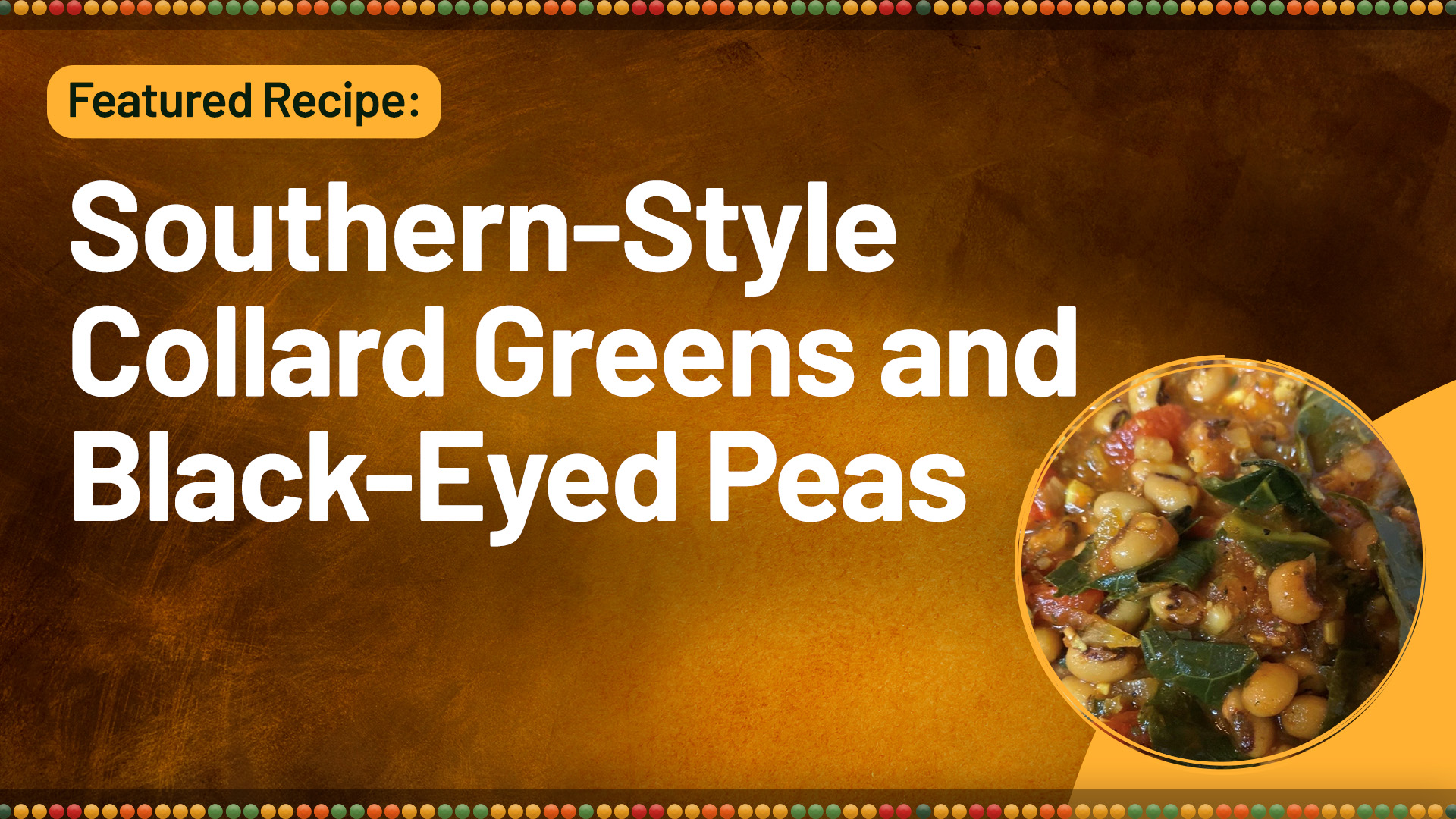
2 large bunches collard greens (or about 8-10 cups chopped, stems removed)
1 red onion, chopped
1 clove garlic, minced
1 teaspoon smoked paprika
1 teaspoon ground cumin
1/4 teaspoon ground turmeric
Onion powder, to taste
Garlic powder, to taste
1 15-ounce can no-salt-added diced tomatoes
1 15-ounce can black-eyed peas, drained and rinsed
Black pepper, to taste
Hot sauce, to taste
Instructions
Bring a large pot of water to a boil. Add collard greens and cook until tender, about 20 minutes.
Drain, reserve 1/4 cup of the cooking liquid, and then coarsely chop the greens.
Heat the reserved collard liquid in a large skillet over medium heat. Add onion, garlic, smoked paprika, cumin, turmeric, onion powder, and garlic powder.
Cover and cook until onions are soft and fragrant, about 4-5 minutes.
Stir in diced tomatoes, black-eyed peas, and chopped collards.
Simmer uncovered for 10 minutes, allowing flavors to combine.
Season with black pepper and hot sauce to taste. Serve warm.
Turmeric Substitutions
If turmeric isn’t available, use one of the following:
- 1/2 teaspoon curry powder
- Extra smoked paprika plus a pinch of black pepper
Optional: Serve over fonio (West African grain).
Fonio Preparation
Ingredients
1 cup dry fonio
2 cups water or vegetable broth
Instructions
Rinse fonio thoroughly using a fine-mesh strainer.
Bring water or broth to a boil.
Stir in fonio, cover, reduce heat to low, and simmer for 5 minutes.
Remove from heat and let steam, covered, for 5 minutes.
Fluff with a fork and serve.
Serving Suggestion
Serve collard greens and black-eyed peas over fonio for a nourishing, plant-forward meal rooted in tradition and flavor.
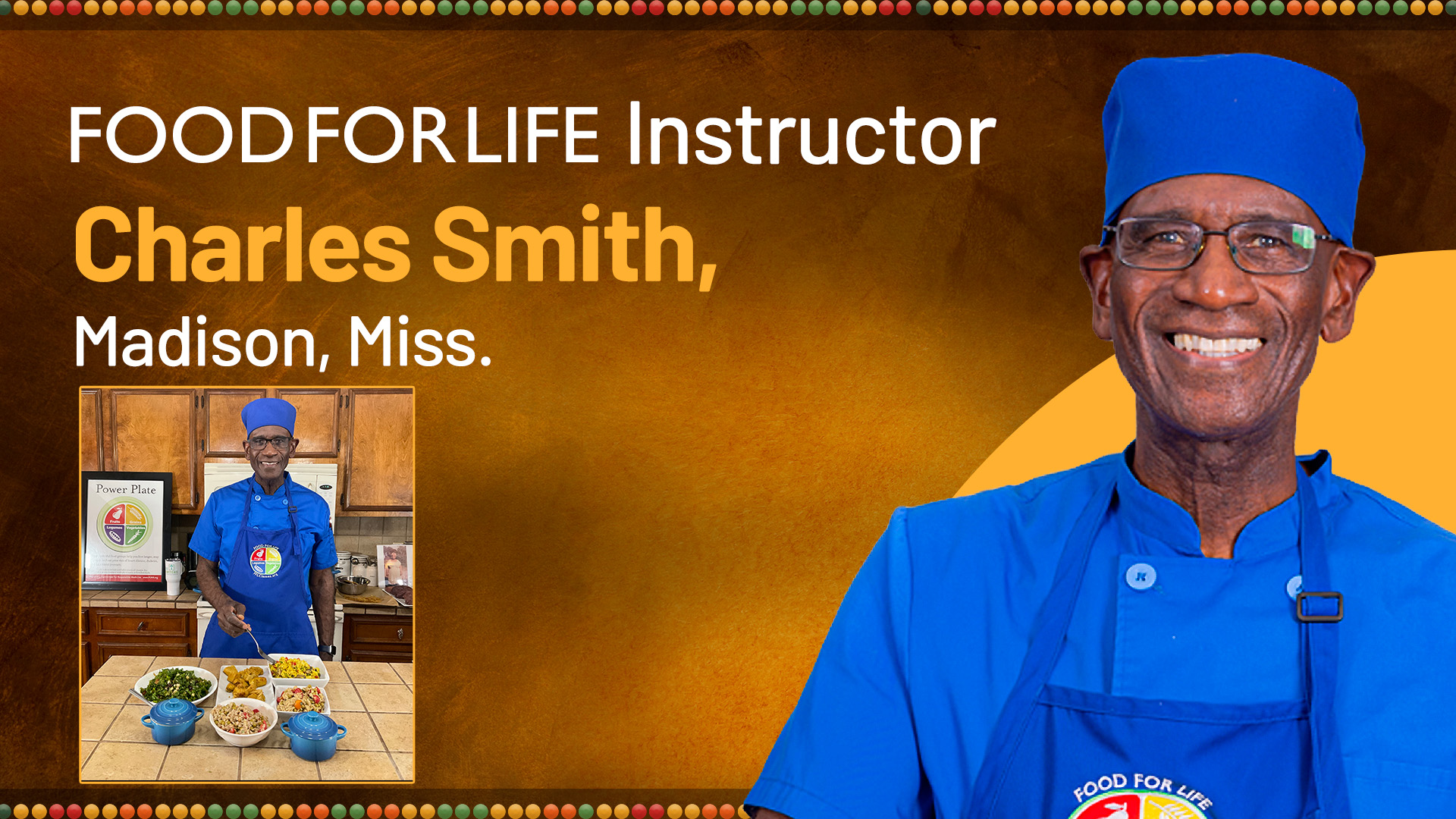
For Charles Smith, becoming a Food for Life instructor is deeply personal. Growing up, obesity and chronic illness were common in his family, and nutrition education was largely absent from the household. Over the years, he lost his mother, father, and two sisters far too young, and today he has loved ones still battling serious, life-threatening illnesses. These losses shaped a belief that now guides his work: With more food education, we would need less medication.
Charles sees his community as an extension of his own family. When he’s teaching, he often recognizes people who remind him of his mother or siblings, and that connection fuels his passion to help others live healthier, longer lives. Cooking has always been part of his story—from learning alongside his mother as a child, to cooking for her as she became ill. Today, he cooks because of her, determined to help others avoid the suffering his family endured.
As a Food for Life instructor, Charles approaches every class and cooking demonstration with heart and purpose. He reminds participants that food matters—and that plant-based eating can be a powerful form of medicine. His message is simple and rooted in care: Eat from the ground, and nourish your body with foods that help you thrive.
For Charles, helping people reclaim their health through food isn’t just educational—it’s generational. Through Food for Life, he’s able to share his story, inspire change, and empower the people he loves most: his community.
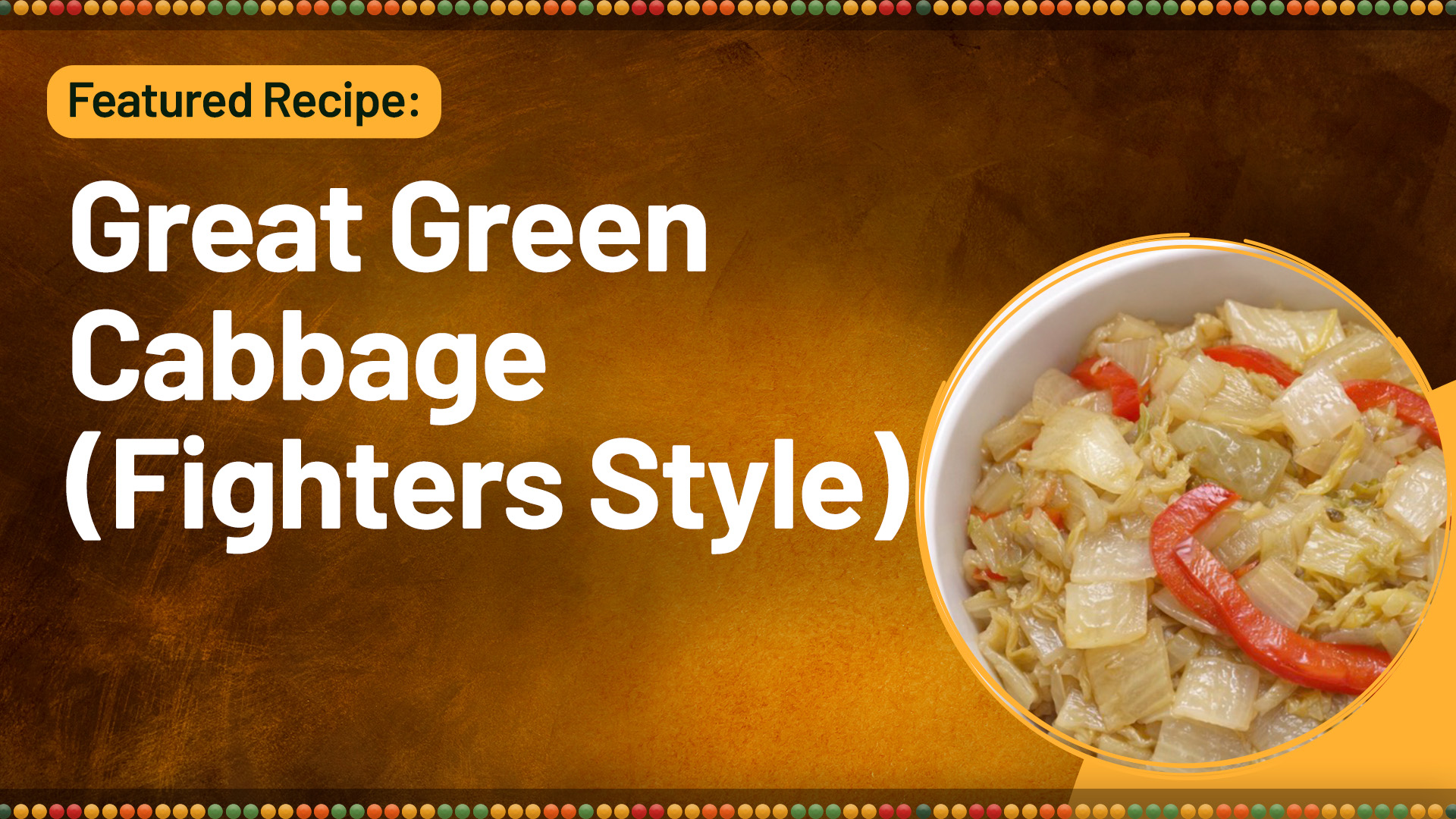
Ingredients
1 medium head green cabbage, shredded
1 medium yellow onion, halved and thinly sliced1/2 red bell pepper, thinly sliced
1/2 yellow bell pepper, thinly sliced
2 garlic cloves, minced
1/2 teaspoon salt (adjust to taste)
1/2 jalapeño pepper, seeded and thinly sliced
2 tablespoons low-sodium vegetable broth or water
1 tablespoon liquid smoke, or to taste
Instructions
Heat a large pan or pot over medium heat.
Add the onion, garlic, jalapeño, and bell peppers. Cook, stirring occasionally, until the onion begins to soften and lightly brown.
Add the shredded cabbage, salt, and vegetable broth (or water).
Cook for 15-20 minutes, stirring occasionally, until the cabbage is tender. Add small amounts of liquid as needed to prevent sticking.
Stir in the liquid smoke, taste, and adjust seasoning as needed.
Fighters Tip:
This is a simple, affordable, and powerful food: no butter, no oil, just plants doing what plants do best—heal, nourish, and fuel the body.
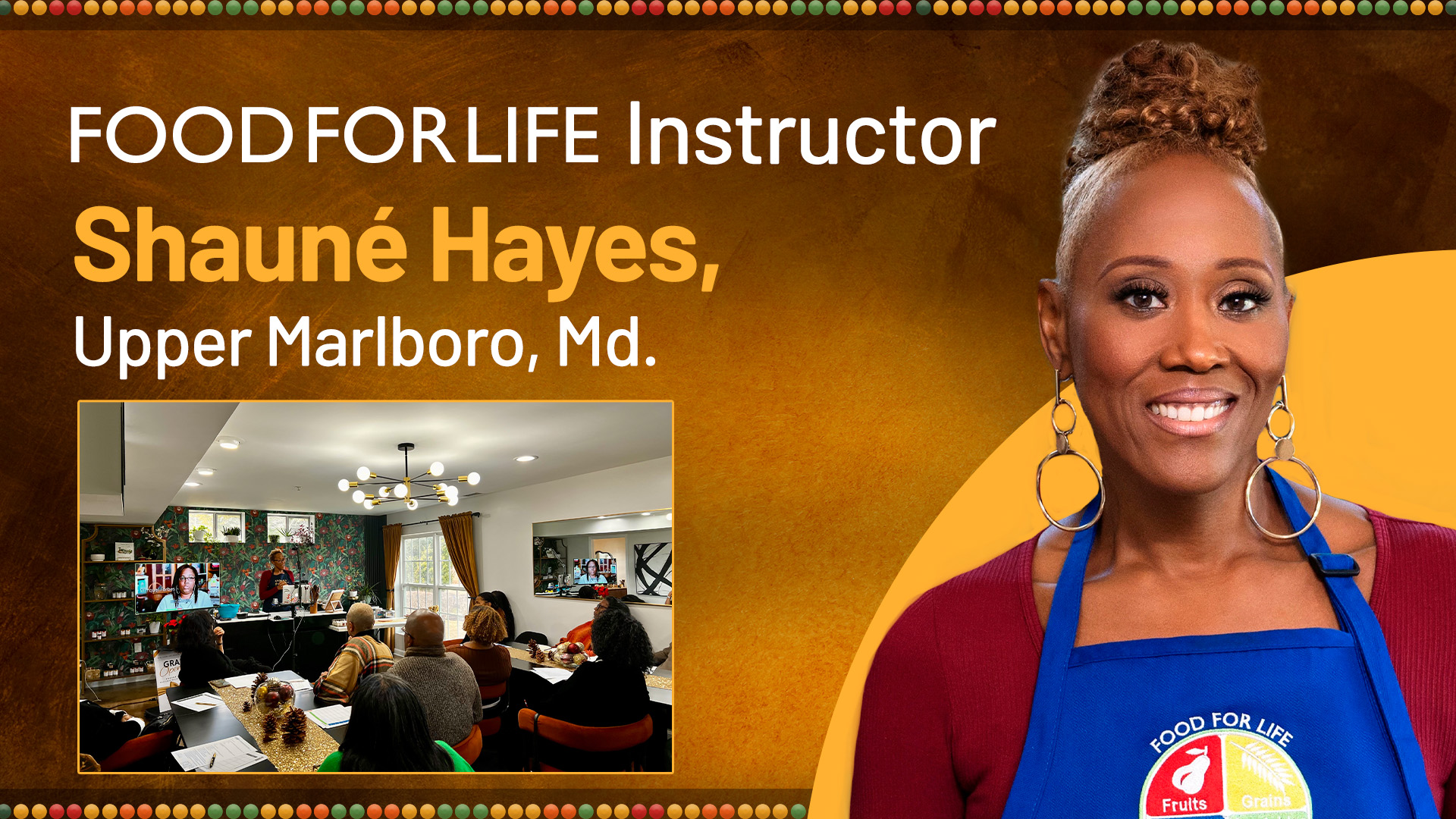
Shauné Hayes became a Food for Life instructor after experiencing a powerful transformation of her own health. Through a whole food, plant-based lifestyle, she lost more than 120 pounds and reversed chronic illness—what began as personal healing soon grew into a calling to serve others. For Shauné, this work is deeply meaningful because it allows her to help restore community health while honoring plant-forward traditions rooted in cultural history.
In her classes, Shauné focuses on empowerment and accessibility, meeting people where they are and equipping them with practical tools they can use immediately. She has seen participants leave feeling more confident in the kitchen and more hopeful about their health, with families rethinking long-held habits and making lasting changes. Through Food for Life, Shauné has watched people reduce their risk for heart disease, cancer, and diabetes, lose weight, and most importantly, reconnect with the idea that food is medicine.
To Shauné, Food for Life is more than an educational program—it’s a pathway to confidence, community, and long-term wellness. Her work reflects a commitment to helping people, especially Black families, reclaim their health and see food not just as nourishment or tradition, but as a powerful tool for healing, longevity, and freedom.
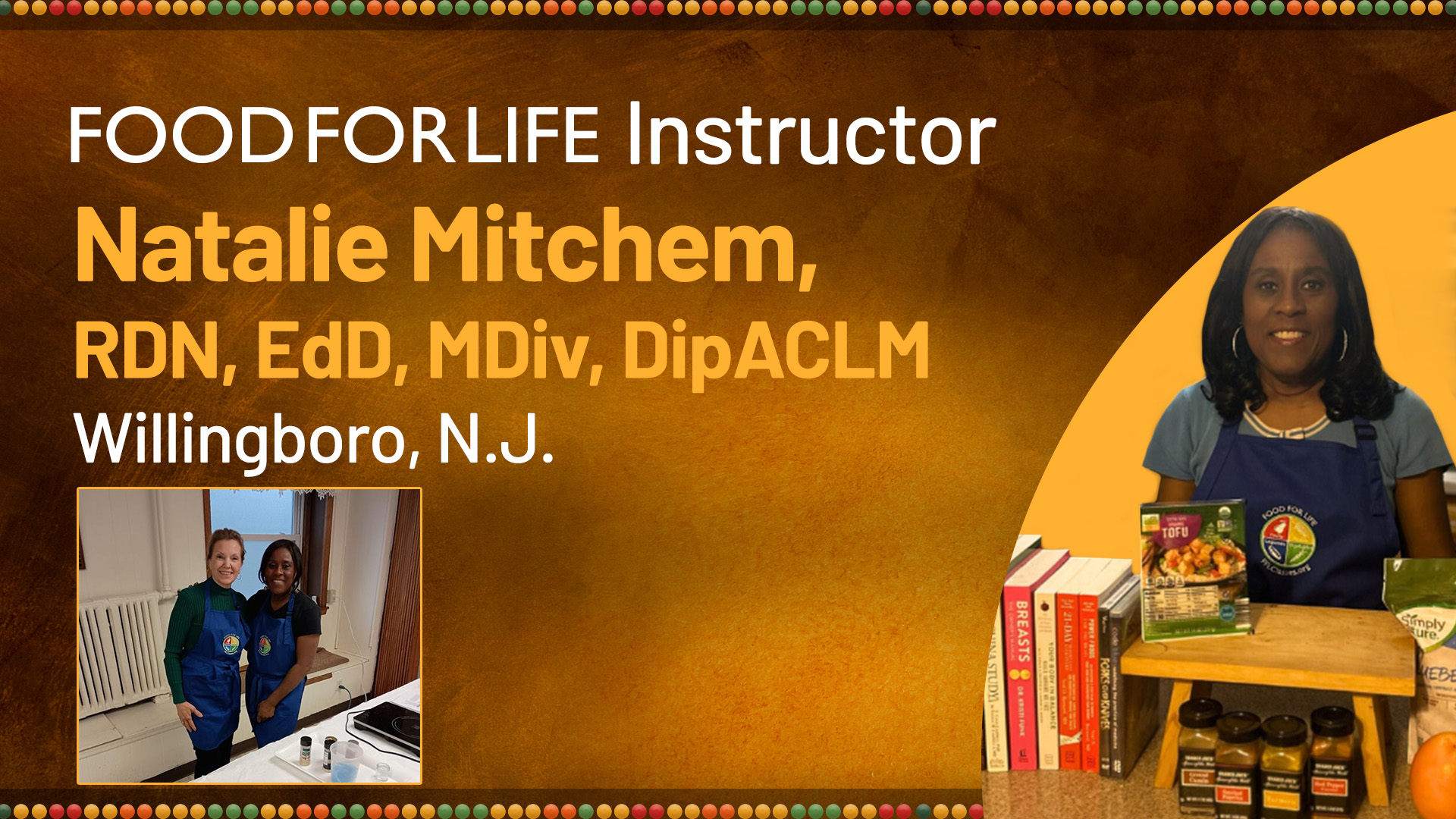
Dr. Natalie Mitchem brings a deeply holistic approach to her work as a Food for Life instructor, blending evidence-based nutrition education with faith, community engagement, and whole-person wellness. A registered dietitian, pastor, and lifestyle medicine professional, Natalie seeks to equip and empower people with practical tools to prevent and reverse diet-related chronic diseases through predominantly plant-based eating—alongside stress management, physical activity, healthy relationships, and spiritual well-being.
Natalie shares Food for Life education across a wide range of community spaces, including local wellness events, the annual Let’s Beat Breast Cancer rally, sorority gatherings, preschool programs for children and staff, and faith-based settings. For her, being a Food for Life instructor expands her “life and wellness toolbox,” allowing her to offer accessible, science-backed guidance that helps individuals make informed and sustainable health choices.
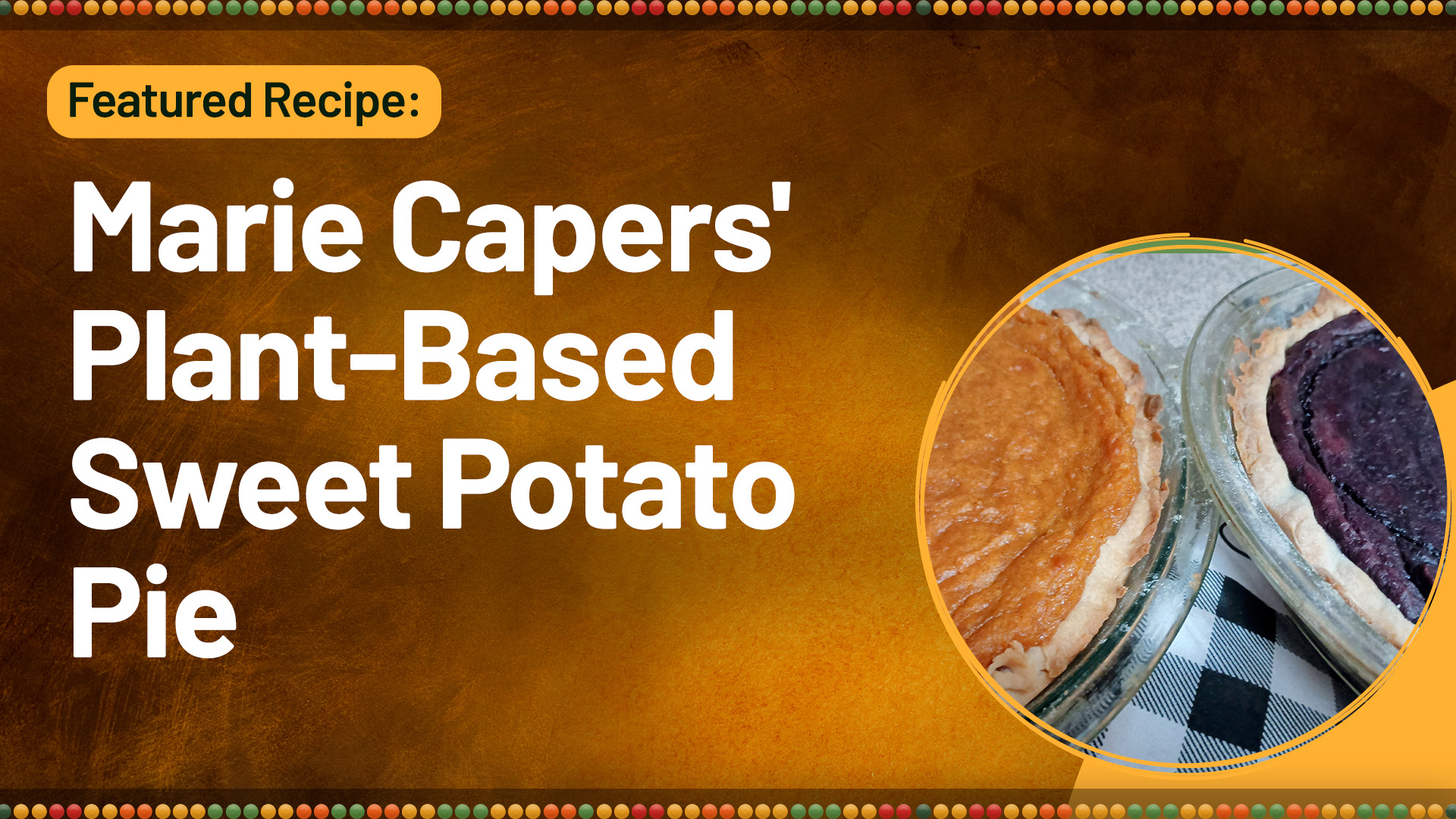
Food, Natalie believes, is deeply tied to culture, memory, and connection. One of her favorite ways to honor that truth is through a plant-based version of her grandmother Marie’s sweet potato pie—a recipe that proves tradition doesn’t have to be sacrificed for health. By swapping simple ingredients like eggs for flour and using plant-based milk with real maple syrup and lemon extract, Natalie created a dish that delivers the same comfort and joy her family remembers. Tested and approved by loved ones and church members alike, the recipe reflects her belief that cultural foods can evolve while still nourishing both body and soul.
Celebrate Black History Month!
History matters! Family recipes pass down through history. This plant-based sweet potato pie is inspired by my grandmother, Marie Capers, who lived to 104 years old, and my friend Donna Green-Goodman, MPH.
Ingredients
6 cups sweet potatoes, roasted and peeled (roasting intensifies the natural sweet flavor)
1/3 cup unbleached flour
1/2 cup plant-based butter sticks, softened (use the sticks)
1 teaspoon lemon extract
1 tablespoon vanilla extract
1 tablespoon plus 1/2 teaspoon cinnamon
1 cup vanilla oat milk (or your favorite plant-based milk)
1 1/2 cups unrefined sugar
Instructions
In a large bowl, mix together all the ingredients by hand with a wire whisk or with a hand mixer or stand mixer until smooth.
Taste test and, if necessary, add more plant-based milk to achieve a smooth texture.
Homemade Crust
Ingredients
2 cups unbleached flour
1 teaspoon salt
1/2 cup cold water
1 cup cold plant-based butter
Instructions
Mix in a food processor or bowl until a large ball forms.
Separate into 2 or 3 balls, roll out, and form in pie pan.
Pour ingredients in the crust, making 2 pies or 24 mini pies.
Bake at 350 F for 50-55 minutes (oven cooking time may vary for different ovens). Check for doneness.
Let pie sit and cool for 30 minutes.