Skip to main content
Physicians Committee Champions National Institutes of Health Program to Qualify Human-Based Methods for Drug Development
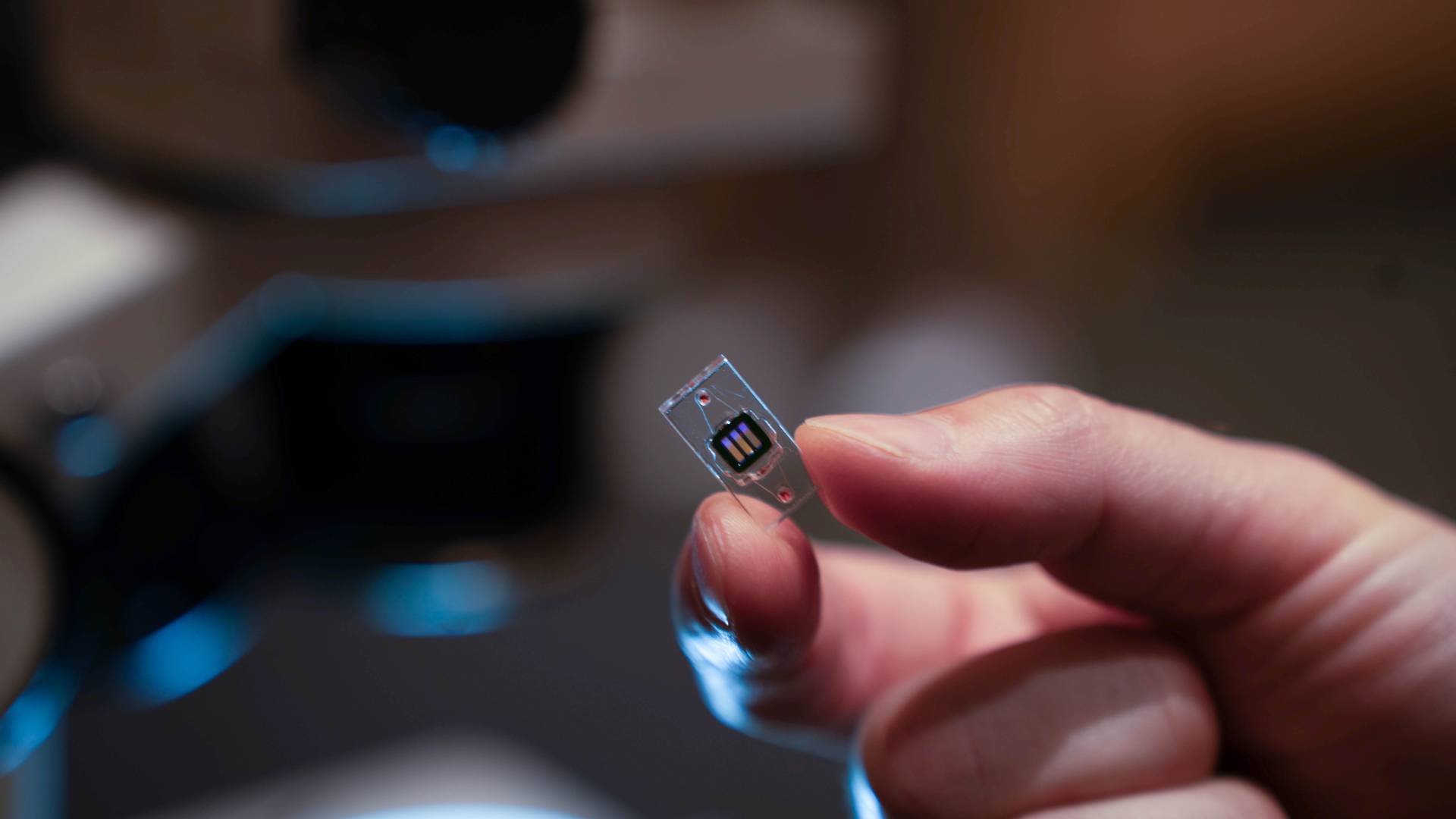
The Translational Centers for Microphysiological Systems (TraCe MPS) were established by the National Center for Advancing Translational Sciences (NCATS) at the National Institutes of Health (NIH) to qualify tissue chips as drug development tools, support their widespread adoption, and help reduce animal testing.
Tissue chips are a kind of new approach methodology (NAM) made up of human cells and fluid channels that allow the flow of important materials, such as nutrients and drug compounds. These innovative technologies mimic the structure and function of human organs and are revolutionizing the way we conduct research and test drugs and other products.
Over the last decade, Food and Drug Administration (FDA) submissions using tissue chips and other NAMs have steadily risen. At the same time, federal policy has increasingly embraced these powerful technologies and their ability to facilitate the move away from animal experiments.
In partnership with the FDA, the TraCe-MPS program serves an important function: to qualify tissue chips—a process that demonstrates their reliability and application in drug development. Although NAMs do not need to be qualified to be considered for FDA review, qualification is a useful process to help build confidence in these relatively novel methods.
Dr. James McGrath is the director of the Translational Center for Barrier Microphysiological Systems at the University of Rochester, one of the four NIH-funded TraCe-MPS centers. He says, “the TraCe centers exist to transform tissue chip and organoid models to something that [the pharmaceutical industry] values for discovery, the FDA values for regulatory use, or both.” He adds, “At Rochester, this has meant learning to think differently about why we build these models and who for. We are no longer building them for ourselves.” His team’s platform has been accepted into FDA’s Innovative Science and Technology Approaches for New Drugs (ISTAND) Program.
Since their inception, the four TraCe MPS centers have led advancements in human-based drug development tools for the liver, kidney, blood brain barrier, and reproductive system. For example, the center at Texas A&M University and the University of Texas Medical Branch, led by Dr. Ramkumar Menon, is advancing women’s health research through its tissue chip model of human pregnancy, which can be used to understand how drugs cross the placental barrier without the use of animals. Dr. Menon’s team has developed five different chips as drug development tools to be submitted for validation and qualification, one of which has already been submitted to ISTAND.
The centers rely on funding from the NIH, but the five-year TraCe MPS program will come to an end in 2029, which may not be enough time for the chips to be qualified. In a comment submitted to the NCATS Advisory Council in September, the Physicians Committee expressed its support for the TraCe MPS program and urged the council to support continued investment in the centers and ensure that their valuable work can continue.
During the advisory council meeting, NCATS director Dr. Joni Rutter shared her support for the TraCe MPS program in response to our comment, and the director of the Division of Preclinical Innovation, Dr. Anna Ramsey Ewing, stated that NCATS “has tools in the toolkit for how [NCATS] can ensure that [the centers] can meet their objectives” and that they will continue to support the important program. We were encouraged by Dr. Rutter’s remarks and look forward to seeing TraCe MPS supported through completion and other exciting ways NCATS advances human-based research.