Skip to main content
The Smoke Over Washington Started on a Dinner Plate
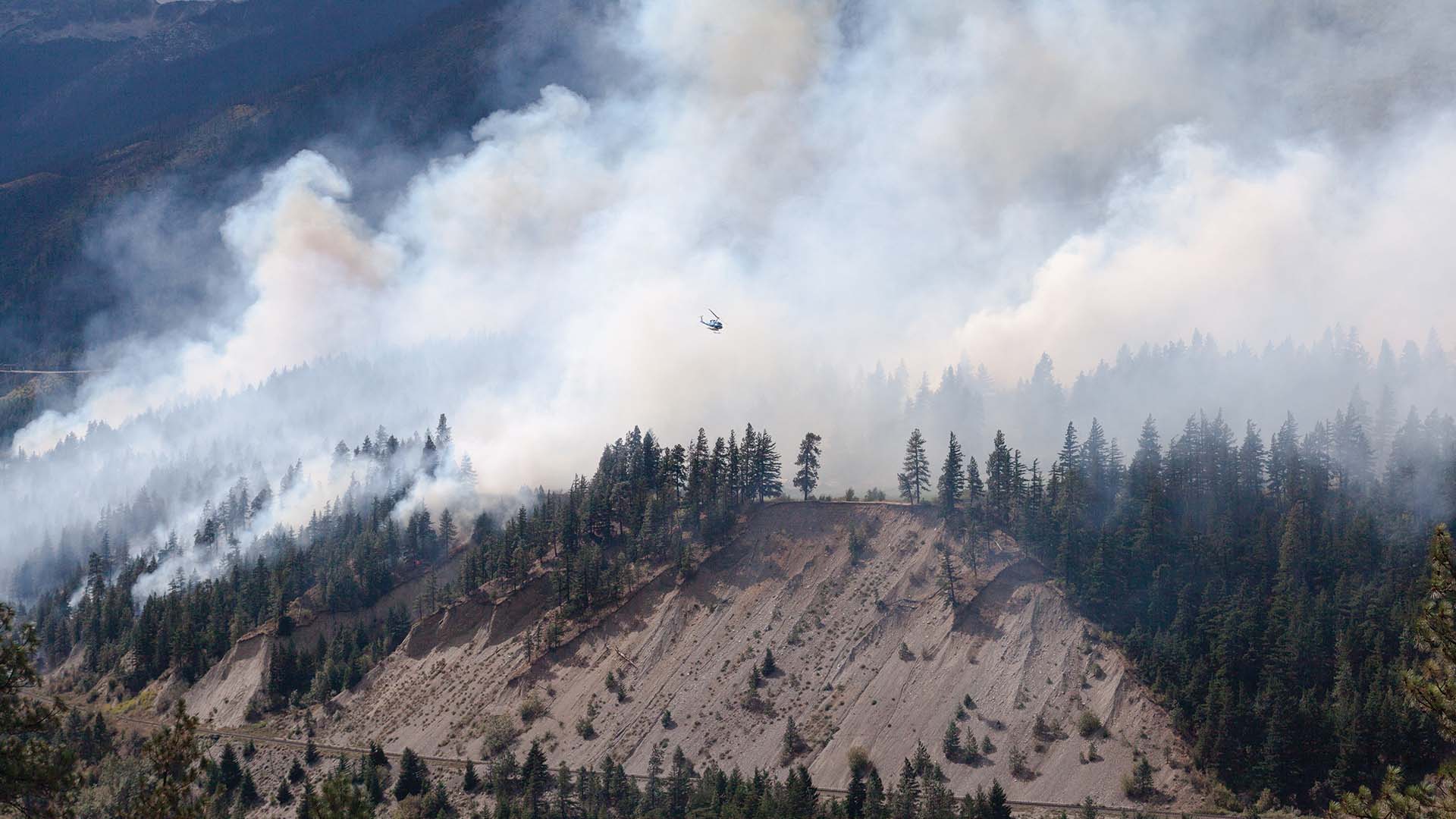
Haze recently obscured the U.S. Capitol and the Washington Monument as smoke from more than a hundred Canadian wildfires triggered a Code Purple air quality alert—“unhealthy for everyone”—across the District, Maryland, and Northern Virginia. The District closed outdoor pools and spray parks; Fairfax County canceled outdoor recess and team practices. A familiar summer ritual—a preview of what climate scientists say is becoming the new normal.
The usual explanations are real: drought, heat, lightning, decades of fire suppression that left forests loaded with fuel. Canada is warming at roughly twice the global average, and World Weather Attribution found that climate change more than doubled the odds of the fire weather behind Eastern Canada's historic 2023 season. Stanford's Noah Diffenbaugh puts a number on the American side: Roughly half the long-term increase in area burned across the western U.S. traces to human-caused warming.
What almost never comes up is what was on our plates last night. I'm a physician who studies diet and metabolic disease, not fire behavior. But across three randomized clinical trials my colleagues and I ran for unrelated reasons, we kept stumbling into the same finding—one that bears on the air over this city right now.
The trials asked clinical questions: Does a plant-based diet improve insulin sensitivity in type 1 diabetes? Help adults with overweight lose weight? Outperform the Mediterranean diet, nutrition's reigning heart-health champion? Each time we had detailed food records, so a colleague asked a question outside the trials' purpose: What was the environmental footprint of all that food?
The pattern held every time. In participants with type 1 diabetes, a low-fat vegan diet cut embedded emissions by more than half. In a larger trial of 244 overweight adults, the same diet again cut diet-related emissions roughly in half, mostly by eating less meat, dairy and eggs. And in a head-to-head crossover against the Mediterranean diet—nutrition's usual planet-friendly pick—the Mediterranean diet cut emissions 20%, the vegan diet 57%.
None of these trials set out to study wildfires—exactly why the finding is worth taking seriously: It surfaced as a byproduct of research aimed at something else entirely.
Here is what connects a dinner plate to a hazy week over the Capitol. Most emissions tied to animal agriculture are methane, from cattle and manure, and livestock account for roughly a third of all human-caused methane globally—more than any other single source. Methane warms far more intensely than carbon dioxide, molecule for molecule, but breaks down within a decade or two rather than lingering for centuries. That short lifespan matters for wildfire risk, which responds to this year's and next year's heat and dryness, not emissions accumulating toward a target a century off. Cut methane from the food system now, and the atmospheric effect shows up within years—roughly the timeline of the drought already driving the fires.
A word on limits: No trial proves a hamburger in Ohio caused a specific fire in Manitoba. These were secondary analyses of self-reported food diaries from a few hundred volunteers, followed for weeks. Diet is one contributor to one greenhouse gas among several driving a warming trend already reshaping fire seasons—not a substitute for better forest management or decarbonizing energy and transportation, still the largest levers by far. But “one contributor” isn't “irrelevant.” Food systems generate roughly a third of global emissions, on par with energy, yet diet rarely gets that weight in a fire-season briefing.
Climate advocates have struggled for decades to get people to change behavior for the planet's sake, because it usually asks for sacrifice now for a benefit landing on someone else later. Diet breaks that pattern. In every trial, the same shift that cut emissions also improved participants' own health within weeks—better blood sugar, lower cholesterol, weight loss. Nobody waited for a future generation to cash in the benefit; it showed up in their own bloodwork first. That's rare enough among climate interventions to deserve treatment as a real policy lever, not a lifestyle footnote.
The smoke over Washington cleared within days as a cold front moved through. The conditions that produced it will not, and next summer's version of this story is already being written into the atmosphere. Some of it comes from tailpipes and power plants we've argued about for decades. Some comes from what's on the plate tonight—within our own reach, unusually for climate change, to rewrite.
Hana Kahleova, MD, PhD, is an endocrinologist board-certified in lifestyle medicine and serves as director of clinical research at the Physicians Committee for Responsible Medicine.