Skip to main content
New Research Demonstrates Utility of Non-Animal-Derived Antibodies to Improve Biomedical Research
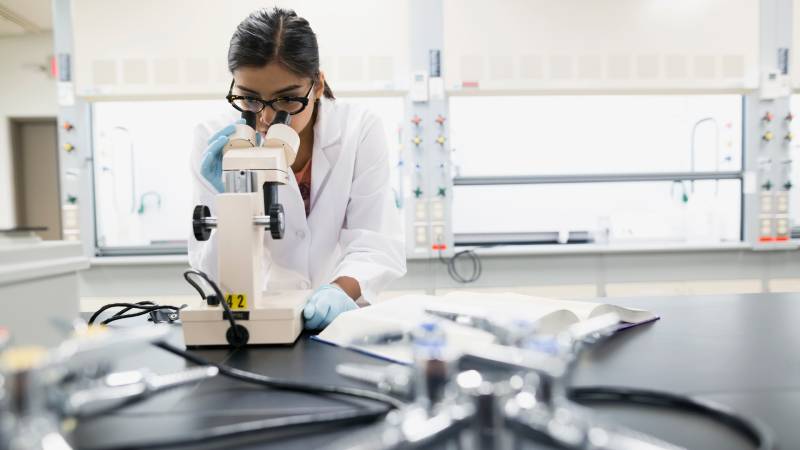
WASHINGTON, D.C.— Researchers have shown that antibodies developed without the use of animals perform as well or better than animal-derived antibodies in commonly used laboratory applications.
Antibodies are essential research tools used to: identify proteins, study how cells work, investigate diseases, and develop new treatments. Historically, most have been produced by injecting animals (rabbits, mice, rats, goats, sheep, horses, chickens, and more) with substances to stimulate antibody production, followed by bleeding and/or killing the animals to obtain the antibodies or the cells that produce those antibodies. Those developed with lab-bench techniques still used animal ingredients. Because these processes are cruel and often fatal to animals and because animal-derived antibodies exhibit significant variation, which can negatively affect experimental reproducibility, researchers have sought to develop fully non-animal-derived antibodies.
The Physicians Committee researchers developed new animal-free antibodies targeting two medically important human proteins: CD33, an immune-system protein important in leukemia and Alzheimer’s disease research, and PD-1, an immune-system protein used in cancer research.
The new animal-free antibodies recognized their intended targets and performed as well or better than the animal-derived antibodies.
The studies, published in the international academic journal Antibody Reports, are freely accessible to scientists online. The researchers also published a commentary in the same journal, outlining actions that can be taken to accelerate the transition toward nonanimal antibodies.
“We have antibodies without the pitter patter of little feet,” said Janine McCarthy, MPH, director of research advocacy at the Physicians Committee. “The door is now wide open to science that is better, both technically and ethically.”
The Physicians Committee provides scientific education and training on nonanimal research method use, as well as education and advocacy for related policy change both in the U.S. and internationally.
To speak with Ms. McCarthy, please contact Reina Pohl at 202-527-7326 or rpohl [at] pcrm.org (rpohl[at]pcrm[dot]org).
Physicians Committee Media Contact
Reina Pohl, MPH
202-527-7326
rpohl[at]pcrm.org
Founded in 1985, the Physicians Committee for Responsible Medicine is a nonprofit organization that promotes preventive medicine, conducts clinical research, and encourages higher standards for ethics and effectiveness in education and research.