Skip to main content
Physicians Committee Provides Recommendations on Animal-Free Science to White House Office

The White House Office of Science and Technology Policy recently sought input on ways to accelerate the American scientific enterprise.
Physicians Committee experts provided recommendations on updates to federal policies, regulations, and guidance that would increase focus on technological innovations for human health research and regulatory testing—advancing medicine, improving efficiency of research expenditure, and reducing animal use.
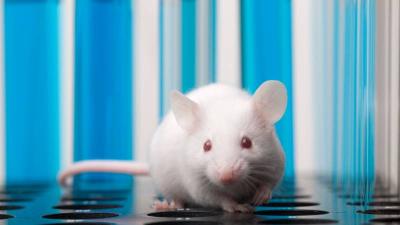
Research using animals often does not translate to humans because of insurmountable species differences in anatomy, physiology, lifespan, disease characteristics, and more. Using animals to model human biology and diseases contributes to wasteful spending and delays in drug development and regulatory testing, leading nine out of ten new treatments that appear successful in animals to later fail in humans, and putting clinical trial participants at risk by failing to predict unsafe or ineffective products.
Fortunately, human-based research methods, including new approach methodologies (NAMs), have rapidly advanced and continue to improve, providing more reliable models of human biology and disease and more predictive testing, with great potential to increase the efficiency of federal research and expenditure and reduce animal use. By moving away from animal experimentation and supporting a scientific landscape built on human-based methods, our federal government can enable more treatments—that are safer and more effective—to make it to more patients at a faster pace.
The Physicians Committee provided detailed recommendations on the following policy mechanisms to support a shift to human-based methods:
Funding and Economic Incentives
- Strengthen Small Business Innovation Research and Small Business Technology Transfer programs to explicitly support the development and validation of NAMs.
- Encourage federal agencies to use Other Transaction Agreements, cooperative agreements, and milestone-based funding more consistently for emerging human-relevant technologies.
- Encourage federal agencies to form qualification and research partnerships with small- and medium-sized businesses.
- Offer additional funding to support new and unconventional research proposals.
- Shift funds from animal-based research projects and infrastructure to support the development and use of human-based methodologies.
Infrastructure and Institutional Transformation
- Facilitate the conversion of animal research facilities (including National Primate Research Centers) into modern hubs for human-based methods.
- Prioritize the development of human-based research centers at academic institutions.
- Expand cross-agency public-private partnerships focused on translational science infrastructure.
- Create funding opportunities for infrastructure and training at new academic institutions.
- Establish research institutes focused on areas where animal experimentation has failed to deliver clinical benefits.
- Facilitate interdisciplinary collaboration to improve the development and use of human-based methods.
- Invest in AI-ready, human-relevant data infrastructure, standards, and public access.
- Support integrated AI and NAM pipelines that improve translation and reduce animal use.
Policy and Regulation Reform
- Update current statutes, regulations, and policies to streamline the phase-out of animal use.
- Replace primate experiments with human-based methods.
- Prohibit federal funds for the forced swim test or tail suspension test.
- Implement measures to mitigate peer review bias that favors animal use, such as implementing training and diversifying review groups.
- Establish fit-for-purpose evaluation and validation frameworks for AI systems.