Skip to main content
Congress Supports Accelerating Nonanimal Chemical Testing in EPA Appropriations
Congress passed another batch of federal appropriations bills last week, providing new funding levels for the Environmental Protection Agency (EPA) and several other federal departments and agencies through September 2026.
Next, it is expected to be signed by the President ahead of the Jan. 30 funding deadline. Included in the EPA’s funding directives is language, advocated for by the Physicians Committee, supporting efforts to continue and accelerate the agency’s work on nonanimal methods in chemical toxicity testing.
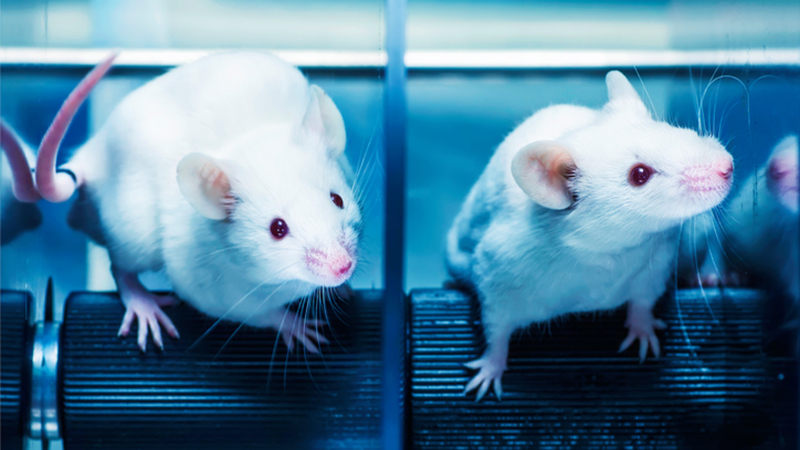
The EPA is responsible for regulating tens of thousands of chemicals to ensure they are not harmful to humans or the environment. Traditional approaches to testing chemicals use large numbers of rabbits, guinea pigs, mice, rats, and many other species in painful and deadly tests, frequently involving forcing these animals to ingest, inhale, or be injected with high doses of chemicals to observe toxic effects until they die or are killed. Fortunately, modern science offers a better path forward. Nonanimal, new approach methodologies (NAMs)—including computational tools and human cell-based systems—can assess chemical effects using methods that more directly reflect human biology, without subjecting animals to suffering.
Replacing animal tests with NAMs is not only an ethical imperative; it is also a public health necessity. For most chemicals people encounter, toxicity data are limited or incomplete. Animal toxicity tests are prohibitively time consuming and costly, often taking many years and costing millions of dollars to complete, making it impossible to evaluate the safety of such a large number of chemicals. In the meantime, the public and wildlife are put at risk of exposure to potentially hazardous substances in consumer products, workplaces, and the environment. Many nonanimal technologies are high-throughput, allowing for rapid testing of 100,000 or more chemicals per day, saving time and money. Many are also human-relevant, relying on human information to better predict potential hazards to human health and better accounting for variations in genetics, preexisting conditions, and life stages—limitations that animal tests cannot adequately address.
In 2016, chemical regulation in the United States changed significantly with amendments to the Toxic Substances Control Act (TSCA). The Physicians Committee worked with Congress at that time to ensure the amended law included a clear mandate for the EPA to prioritize test methods that reduce or replace the use of vertebrate animals. Since then, the EPA has released a NAMs Work Plan and expanded efforts to achieve reduced animal use in chemical testing. However, in the midst of agency restructuring and staffing changes, it is essential that this work continue to be prioritized to address remaining needs and to maintain the EPA’s position as a global leader in NAMs.
The Physicians Committee worked with Congress to provide support for NAMs in Fiscal Year 2026 EPA appropriations. This provision explicitly “recognizes the agency’s work on NAMs and supports efforts to continue and accelerate this work,” and specifies several ways the EPA should address remaining barriers for NAMs implementation, including:
- Clarifying how NAMs can be used to meet statutory and regulatory testing requirements;
- Ensuring EPA staff are trained in the evaluation and application of nonanimal methods;
- Continuing collaborations to advance NAMs; and
- Reporting within one year on progress made toward reducing animal testing.
These directives are essential. Clear guidance on the use of NAMs helps ensure that outdated policies do not inadvertently default to animal testing when a stronger nonanimal testing strategy is available. Training staff in these approaches is a necessary step in overcoming longstanding institutional reliance on animal tests driven by lack of familiarity with NAMs. The EPA’s engagement in national and international collaborations helps promote information-sharing and coordination on strategies to advance NAMs. Requiring a public progress report introduces accountability and allows Congress and the public to assess whether the agency is meeting its animal-reduction goals.
These improvements will only be possible if NAMs-related activities at the agency are sufficiently resourced. Reductions in funding for the EPA could delay its work to advance the use of nonanimal approaches and make progress in reducing and replacing animal testing. The Physicians Committee will continue working with the EPA and Congress to ensure animal reduction and replacement strategies are prioritized at the agency. Greater reliance on nonanimal testing approaches will lead to faster and more predictive chemical evaluations, protect animals and human health, and support innovation.