Skip to main content
2025–2030 Dietary Guidelines for Americans: A Mixed Bag and a Process Tainted by Industry Influence
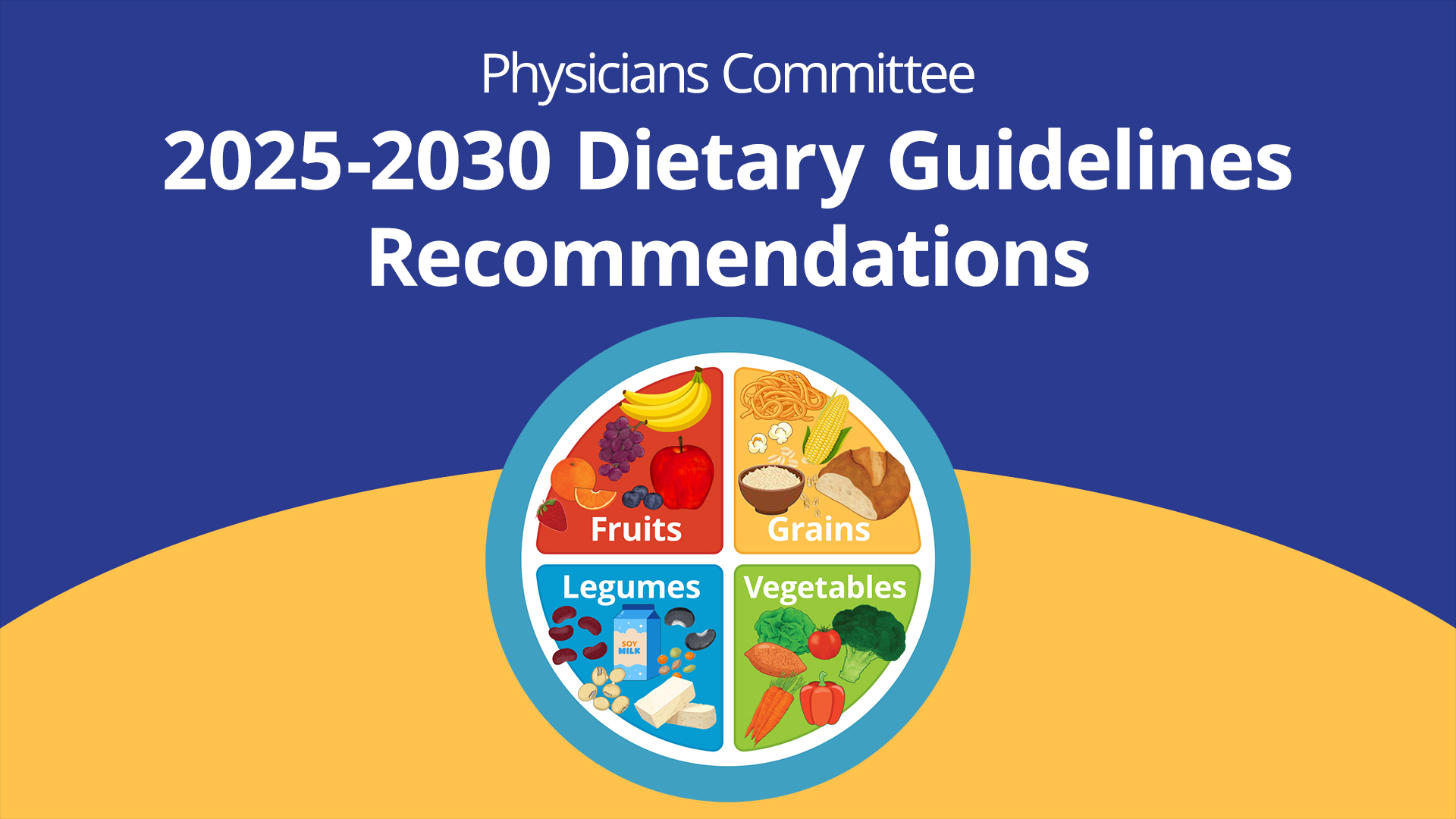
The Dietary Guidelines for Americans (DGA)—issued by the U.S. Department of Agriculture (USDA) and the Department of Health and Human Services (HHS)—shape federal food programs and nutrition messaging nationwide for the next five years, including school meals and other public nutrition initiatives.
The 2025–2030 DGA, released on January 7, 2026, includes new consumer-facing materials and an updated “food pyramid” graphic. But beneath the surface, the Guidelines contain major contradictions—especially around saturated fat, protein, and the role of meat and dairy—along with serious concerns about industry influence in the development process.
The Physicians Committee for Responsible Medicine supports clear, evidence-based dietary guidance that prioritizes health, equity, and scientific integrity—without undue influence from industries that profit from the recommendations.
What the 2025–2030 Guidelines Get Right
The new DGA include several elements that align with long-standing public health priorities:
1. They acknowledge the need to limit saturated fat
The Guidelines keep a cap on saturated fat (no more than 10% of daily calories), which aligns with strong evidence linking saturated fat to higher LDL (“bad”) cholesterol and cardiovascular risk.
2. They emphasize fruits and vegetables
The public-facing guidance includes daily serving targets for vegetables and fruits.
3. They encourage limiting alcohol
While the messaging is broad, the inclusion of alcohol reduction is directionally appropriate.
4. They attempt to simplify the message
A shorter, less jargon-heavy approach can help more people understand the basics of healthy eating.
Where the Guidelines Fall Short
Despite some positive elements, the 2025–2030 DGA need serious improvements to protect public health.
1. They tell Americans to limit saturated fat—while promoting major sources of it
The Guidelines maintain a saturated fat limit, yet elevate foods like cheese, full-fat dairy, butter, and red meat in prominent “healthy fat” and protein messaging—creating a confusing and contradictory message for the public.
If the goal is to reduce saturated fat, the Guidelines should clearly name where most saturated fat comes from in the American diet: meat and dairy products.
2. They push a high-protein target that is unnecessary—and potentially harmful if it increases animal protein
The DGA encourage a protein target of 1.2–1.6 grams per kilogram of body weight per day, which is substantially higher than the previous minimum standard and is widely interpreted as a national “eat more protein” directive.
This is concerning because:
- Most Americans already meet protein needs.
- Increasing protein intake can translate into more meat and dairy in the context of these guidelines, which can worsen cardiometabolic risk.
- The Guidelines do not clearly emphasize that plant protein—from beans, peas, lentils, and other plant foods—supports health outcomes and avoids the saturated fat and other risks that come with many animal sources.
3. They minimize foods that improve health outcomes—whole grains and legumes
The new food pyramid and public-facing messaging deemphasize whole grains and fail to center legumes as a primary protein source, despite strong evidence that diets rich in fiber-containing plant foods reduce chronic disease risk.
Fiber is under-consumed in the U.S., and it is found naturally in plant foods—not in animal products. Shifting guidance away from fiber-rich staples (whole grains, beans, peas, lentils) undermines one of the most important dietary levers for public health.
4. They “condemn processed foods” in a way that misleads the public
The Guidelines strongly discourage “highly processed foods,” but fail to distinguish between:
- Processed foods that raise risk (notably processed meats and sugar-sweetened beverages), and
- Processed foods that can protect health, including plant-based fortified foods that help prevent nutrient shortfalls and support healthy dietary patterns.
Blanket messaging stating that “processed = bad” can also stigmatize practical, affordable options that help people eat more plant-based—especially when those foods are fortified with key nutrients like folic acid and vitamin B12.
5. They portray vegetarian and vegan diets as risky when they are nutritionally adequate
The Guidelines suggest extensive nutrient “shortfalls” for vegetarian and vegan patterns. This framing discourages some of the healthiest dietary patterns available and reinforces confusion.
In reality, well-planned vegetarian and vegan diets are nutritionally adequate and can support health across the lifespan, with one key requirement: a reliable source of vitamin B12.
Industry Influence and Lack of Transparency
The Physicians Committee has raised serious concerns that the process used to develop the new DGA sidestepped long-standing protections designed to prevent special interests from driving federal nutrition guidance.
- Of the nine scientific foundation authors underlying the new Guidelines, the Physicians Committee reported that at least eight had food-industry ties, including relationships with beef and dairy groups and other industry entities.
- On January 8, 2026, the Physicians Committee filed a petition with the Offices of Inspector General at USDA and HHS requesting that the Guidelines be withdrawn and reissued due to alleged unlawful industry influence.
- Multiple outside reports also raised concerns that the new DGA departed from the previous Dietary Guidelines Advisory Committee (DGAC) process and leaned toward messaging aligned with meat- and dairy-forward patterns.
The public deserves dietary guidance built from independent evidence—not shaped by industries with a financial stake in the outcome.
What the Physicians Committee Recommends Instead
To reduce chronic disease risk and make the Guidelines internally consistent, the Physicians Committee urges USDA and HHS to strengthen the DGA in the following ways:
1. Clearly identify the main sources of saturated fat—and reduce reliance on them
The Guidelines should retain the saturated fat limit and plainly state that the largest contributors are meat and dairy products, and that reducing these foods helps protect heart health.
2. Prioritize plant protein, not animal protein
If protein is emphasized, the Guidelines should direct people toward beans, peas, lentils, soy foods, and other plant sources—not more meat and dairy.
3. Elevate whole grains and legumes as foundational foods
Whole grains and legumes support heart health, diabetes prevention, and healthy weight management—largely because they deliver fiber and other protective compounds absent from animal foods.
4. Replace blanket anti-processed messaging with science-based distinctions
Processed meats and sugar-sweetened beverages deserve strong warnings. But healthful fortified plant foods (like certain breads and breakfast cereals) can improve nutrient intake and support healthier dietary patterns.
5. Affirm that vegetarian and vegan diets are healthful and adequate
The Guidelines should communicate clearly that vegetarian and vegan patterns can provide all essential nutrients—with a reliable source of vitamin B12 from supplements or fortified foods.
6. Emphasize water as the beverage of choice and health benefits of non-dairy options
The Guidelines should recognize lactose intolerance prevalence and the health concerns associated with dairy, and position water as the primary beverage.
A Better Visual Guide: Why We Prefer the Power Plate
The 2025–2030 Dietary Guidelines reintroduced a prominent pyramid-style graphic through the federal “New Pyramid” messaging. This visual elevates animal-based “healthy fats” and protein sources, while downplaying foundational staples like whole grains and largely omitting legumes as a primary protein category.
That creates a predictable public takeaway: eat more meat, more cheese, and more full-fat dairy—even though the same Guidelines still include a saturated fat limit and acknowledge the nation’s ongoing burden of chronic disease.
When the messaging points in different directions, the result is confusion.
That’s why we prefer the Power Plate
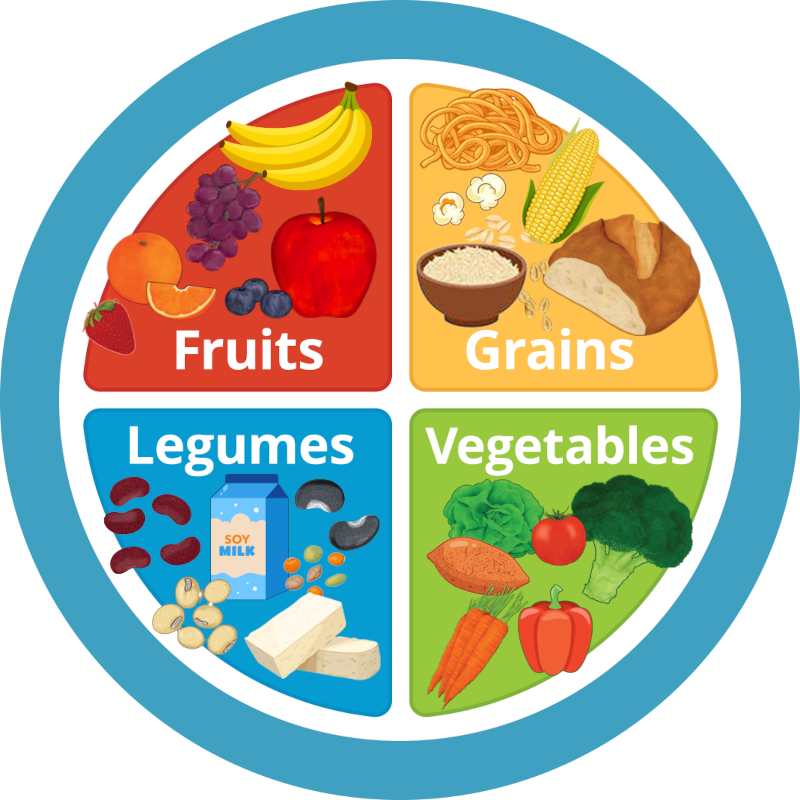
Instead of centering foods that drive saturated fat intake, the Physicians Committee’s Power Plate highlights the foods most consistently associated with better health outcomes.
The Power Plate emphasizes:
- Vegetables
- Fruits
- Whole grains
- Legumes (beans, peas, and lentils)
These foods are naturally rich in fiber—an under-consumed nutrient linked to lower risk of cardiovascular disease, type 2 diabetes, and other chronic conditions. Diets built around these foods also help replace major sources of saturated fat.
A Visual with a Long History
The Power Plate was developed to offer a simple, evidence-based visual that aligns with what decades of nutrition research show supports long-term health. It starts with foods that support heart health, metabolic health, and overall dietary quality.
By centering fiber-rich plant foods, the Power Plate reflects a dietary pattern that is aligned with chronic disease prevention.
Conclusion
The Dietary Guidelines for Americans influence millions of meals—especially in schools and other federal nutrition programs. When the messaging is internally contradictory, the public is left to guess what “healthy” means, and the result is often more confusion—not better health.
The Physicians Committee supports the parts of the 2025–2030 Guidelines that encourage fruits, vegetables, and a limit on saturated fat. But the Guidelines should be strengthened to reduce reliance on major sources of saturated fat, prioritize plant-based protein foods, use clearer distinctions about processed foods, and affirm that vegetarian and vegan dietary patterns are nutritionally adequate with vitamin B12.
We will continue urging USDA and HHS to revise the Guidelines to ensure they are based on independent scientific evidence—not shaped by industries that benefit from increased consumption of meat and dairy.