Skip to main content
The Future of Safe Sunscreens: Assessment Without Animal Testing
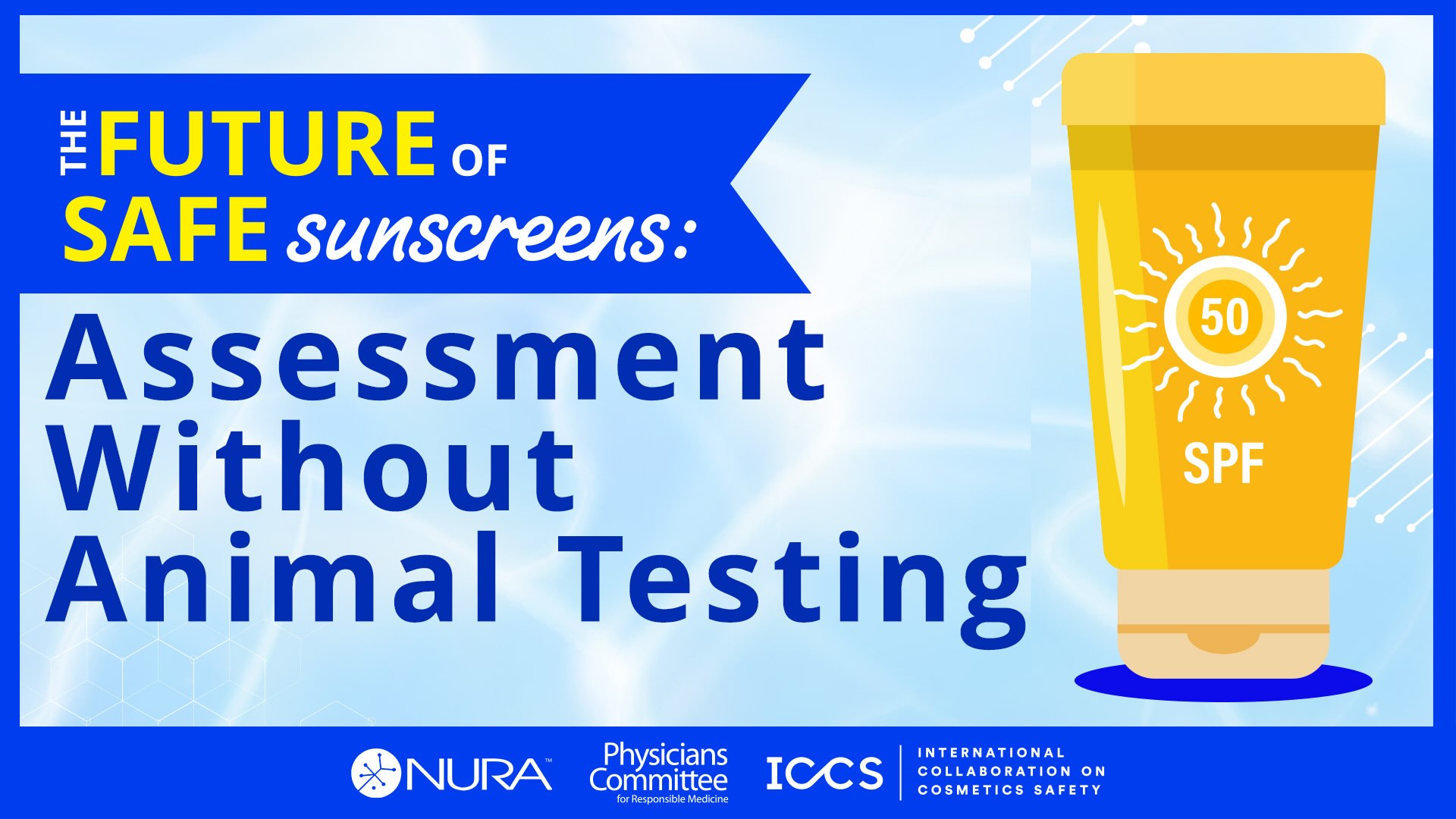
Historically, sunscreen assessment has been complicated by diverse and even conflicting data requirements among regulatory authorities. In many countries, product developers are mandated to avoid animal testing whenever possible while other countries continue to require it.
As an example, the United States Food and Drug Administration (FDA), categorizes sunscreens as over-the-counter (OTC) drugs, not cosmetics. This means sunscreens sold in the US are subject to the same testing requirements as OTC pharmaceuticals which severely limits access to the UV-filter innovation found internationally. However, with passage of the 2025 SAFE Sunscreens Act, the US Congress has directed the FDA to modernize sunscreen assessment, a move which aligns perfectly with FDA-wide efforts to replace animal testing with new approach methods (NAMs).
This webinar series, presented in partnership with the International Collaboration on Cosmetics Safety (ICCS), aims to identify practical solutions for UV-filter development and testing that improve predictivity while providing animal-free assessments of sunscreens. In the first session, experts will discuss the Global Perspectives on Sunscreen Regulation, covering unique experiences of implementing NAMs across Europe, the United States and Brazil. The second session will focus on Modern Safety Assessments for UV Filters, highlighting Next Generation Risk Assessment (NGRA) principles, systemic toxicity, carcinogenicity, developmental toxicity, and Read-Across approaches for sunscreens. The third session will tie everything together with a discussion of Policy and the Regulatory Path Forward for Sunscreen Safety.
Abstracts, learning objectives, speaker bios, and more details will continue to be added as information is confirmed and finalized. Following each session, recordings and resources will be posted to www.pcrm.org/SunscreenResources. Check back often for updates!
Session 1: Global Perspectives on Sunscreen Regulation
Tuesday, July 14, 2026
FEATURING:
Sunscreen Regulation in a Global Context: Challenges and Opportunities in the US
Kimberly Norman, PhD, DABT, ERT, Personal Care Products Council
- Summarize the global sunscreen regulatory landscape, identifying areas of convergence and divergence across international markets
- Analyze the unique challenges within the U.S. regulatory system, including data requirements for GRASE determinations and barriers to market entry for new UV filters
- Explore opportunities to modernize U.S. sunscreen regulation, with a focus on advancing science-based, efficient, and globally aligned approaches to safety assessment and innovation
European Union UV Filter Safety Regulations: Raising the bar and setting the pace for the rest of the world
J Nash, MS, PhD, Procter & Gamble
- Finished products containing UV filters are cosmetics and subject to animal-testing bans
- Safety of UV filters is assessed by independent experts at the Scientific Committee on Consumer Safety (SCCS), according to their Notes of Guidance
- Efficacy and safety testing follow international standards
Human-based Approaches for Assessment of UV Filters
Warren Casey, PhD, DABT, Office of Research Innovation, Validation, and Application (ORIVA), US National Institutes of Health (NIH)
- US National Institutes of Health will discuss efforts to address the endpoints relevant to FDA concerns
Transitioning to NAMs for Sunscreens in Brazil
Damaris Cristine Marios Dos Santos, MS; Grupo Boticário
- Brazilian regulatory landscape regarding the acceptance and integration of New Approach Methodologies (NAMs) for environmental assessments in the cosmetics sector.
- Application of NAMs in environmental hazard and risk assessments from a cosmetic perspective - case study.
- Emerging environmental concerns, "coral-safe" claims, and how NAMs can be applied.
Discussion and Q&A
Dave Allen, PhD (moderator), International Collaboration on Cosmetics Safety
Eryn Slankster-Schmierer, MSc, PhD (moderator), Physicians Committee for Responsible Medicine
Shagun Krishna, PhD (moderator), Physicians Committee for Responsible Medicine
Session 2: Modern Safety Assessments for UV Filters
Thursday, August 13, 2026
10:00 am – 12:15 pm ET / 14:00–16:15 UTC
FEATURING:
Principles of NGRA for Sunscreens, with a Systemic Toxicity Case Study using Benzophenone-4
Matthew Dent, PhD, Unilever
- To understand the ICCR NGRA principles and how they apply to the assessment of sunscreens
- The importance of using a tiered, exposure-led framework, including an illustrated example
Screening for Carcinogenicity of Sunscreen Chemicals: A New Approach
Samuel M. Cohen, MD, PhD, University of Nebraska Medical Center
- (Cohen 2025)
- Provide a basis for screening for potential carcinogenicity in humans
- Illustrate a method for screening for carcinogenicity in humans based on mode of action, involving genotoxicity, immunosuppression, estrogenic activity, and cytotoxicity with regeneration.
DART NAMs Screening: Establishing a Scientific Roadmap for UV Filter Assessment
Matthew Burbank, PhD, L’Oréal
- NAMs can cover all key stages of the reproductive and developmental cycle (to varying extents), providing mechanistic insight (MoA/AOPs)
- No single validated alternative method fully captures the complexity of reproductive toxicity → an Integrated Testing Strategy (ITS) / Weight of Evidence (WoE) approach remains essential
- Demonstrates the value of an NGRA approach combining NAMs + real-world exposure data for robust decision-making on legacy UV filters
From Data to Safety Conclusions: Risk Assessments for Avobenzone and Octocrylene
Kimberly Norman, PhD, DABT, ERT, Personal Care Products Council (PCPC)
- Explore the recently published comprehensive assessments of avobenzone and octocrylene, highlighting the evaluation of toxicological evidence, human exposure estimates, and risk characterization.
- Demonstrate the application of weight-of-evidence approaches to ingredient safety assessment and their value in supporting confidence in sunscreen safety.
Beyond Structural Similarity: Implementing Next-Generation Risk Assessment (NGRA) and Functional Analogues to Establish the Safety of Avobenzone
Catherine Mahony, Procter & Gamble
- Demonstrate how NAMs provide mechanistic context
- Rule out specific activity
- Utilize functional (biological) analogues to increase confidence
Session 3: Policy and the Regulatory Path Forward for Sunscreen Safety
Friday, September 11, 2026
10:00 am – 11:30 am ET / 14:00–15:30 UTC
FEATURING:
Summary
Donna Macmillan, PhD, International Collaboration on Cosmetics Safety
- Key takeaways from Sessions 1 & 2
- ICCS current activities related to sunscreens
Policy and the Regulatory Path Forward
Emily Anderson, MS, Physicians Committee for Responsible Medicine
- How the SAFE Sunscreens Standards Act could open the door for NAMs in FDA sunscreen decisions
- The FDA ISTAND program as a pathway to qualify NAMs for sunscreen safety assessments
- What the US and EU can learn from each other: Bridging OTC drug versus cosmetic frameworks
Panel Discussion on the Path Forward
Donna Macmillan, PhD; Session 3 Presenter & Discussion Moderator
Emily Anderson, MS; Session 3 Presenter
Eryn Slankster-Schmierer, MSc, PhD; Series Host & Moderator
J Nash, MS, PhD; Session 1 Presenter
Kimberly Norman, PhD, DABT, ERT; Session 1 & Session 2 Presenter
Matthew Burbank, PhD; Session 2 Presenter
Matthew Dent, PhD; Session 2 Presenter
Warren Casey, PhD, DABT; Session 1 Presenter
Special Thanks to the Steering Committee and those who helped develop the agendas for this series.
Dave Allen, PhD, International Collaboration on Cosmetics Safety
Donna Macmillan, PhD, International Collaboration on Cosmetics Safety
Emily Anderson, MS, Physicians Committee for Responsible Medicine
Eryn Slankster-Schmierer, MS, PhD, Physicians Committee for Responsible Medicine
Gavin Maxwell, PhD, Unilever
J Nash, MS, PhD, Proctor & Gamble
Jon McCord, PhD, Physicians Committee for Responsible Medicine
Kimberly Norman, PhD, DABT, ERT, Personal Care Products Council
Kristie Sullivan, MPH, Institute for In Vitro Sciences
Matthew Dent, PhD, Unilever
Shagun Krishna, PhD, Physicians Committee for Responsible Medicine
Find recordings and select resources from this series at www.pcrm.org/SunscreenResources.